I am often asked why God allows suffering to happen. I just emailed someone the following answer and I thought I'd share it here. (A little background...this person has a marriage that is falling apart due to infidelity. They said that they want to believe in God but it "gives them pause" every time they see babies suffering, etc.)
I'm sure it gives God pause too. Everything that is wrong in this world (including bad marriages) came as a result of a human's poor choice. God CAN correct everything, but I don't think that's God's role, to run behind us like a mechanic or butler, fixing everything we break. He WILL make everything right in the end, but until then he promises to be with us through the pain and suffering.
I recently asked a group this question: If you are a parent and you had the option to have a child that was wired to never disobey, always be respectful and grateful, and always say the right thing at the right time...would you choose that option or would you choose to let them live a normal life and take the risk of misbehavior? No one in the group said they'd choose the first option. Why? Because it would be like having a robot for a child. Who wants a robot? We'd rather take the risk that they will cheat and drink and steal and get pregnant than have a robot. There is no relationship with a robot.
That's exactly the choice that God made too. He risked giving us free choice in hopes that we would be in relationship with him. He could have made us robots. But what is the benefit in that? As a result of God's risk, we all suffer. Thankfully God is with us to bring healing and comfort and some day he will "make all things new" as it says in the book of Revelation.
At least...that's the short answer to a very big question.
Thursday, June 02, 2005


Wednesday, June 01, 2005
Why People Don't Attend Church (Part 3)
Before I go any further in this discussion, let me say that it's not all the church's fault why people don't attend church. Sometimes it's the issue of the would-be attender. And sometimes it's not the fault of either. It's just the result of a busy world with too many things to do.
Also, let me clarify something. When I talk about "attending church", I'm simply talking about a Sunday service. "Church" is much bigger than that. In reality, "church" is a community of people that have committed their lives to obeying Jesus together. But for the sake of this discussion, I'm reducing the meaning of church to the Sunday service because that's what most people think of when they hear the word and that's the most common entry point into the community.
Given that definition, another reason that people don't attend church is that there is too much competition for that time slot. When I think of our "competition" on Sunday morning, I never think of another church. We're not competing for people to attend our church over another. We are competing with things like...sleeping in, coffee and the Sunday newspaper, fishing, golfing, house chores. There are only so many hours in the week and most of us have more on our "to do" list than we have time to do them in.
Many people can't justify taking a couple hours of valuable time to participate in something that they see no immediate return on their investment. In two hours I can play nine holes, or put in a garden or get the paper read! Church will always be there. It's not as urgent a need as the others are.
Lesson: Churches need to make their Sunday service valuable. Now, in theory, you shouldn't have to do that for church members, people that are committed to the community. Members should gather for the same reason that a family gathers for a meal - to build relationship (not the gourmet meal). But I"m not talking about the committed. I'm talking about the person that is considering church attendance.
There are three things that I've seen people attracted to... a chance to build relationship, music that helps them connect with God and a message that helps them to be a better person - whether that's understanding God better, or other people or themselves. If a person is convinced that attending a church service will make their life better in some way, they'll make time for it. If they perceive that church attendance is a time waster, a mere religious formality, then their pragmatic side takes over and they stay home. That might seem selfish, but remember, I'm not talking about committed believers. I'm talking about that individual who is assessing how they should spend their time. They don't have any connection that makes them feel obligated to attend. In fact, it's their other life obligations that make them want to stay home.
The reality is that most people won't venture into a church until they have a pressing concern... they want to expose their children to God, their marriage is failing, they have lost a sense of purpose, etc. They suddenly feel vulnerable and are looking to see if God can meet them in their weakness. For this reason, it's imperative that churches offer these seekers an experience that impacts them for good and not a social club or meaningless religious formality. In many cases, they'll only give you one chance. I wish that wasn't the case but it is. They need to walk away saying, "I'm glad I came. I needed that. I need to return for more."
Also, let me clarify something. When I talk about "attending church", I'm simply talking about a Sunday service. "Church" is much bigger than that. In reality, "church" is a community of people that have committed their lives to obeying Jesus together. But for the sake of this discussion, I'm reducing the meaning of church to the Sunday service because that's what most people think of when they hear the word and that's the most common entry point into the community.
Given that definition, another reason that people don't attend church is that there is too much competition for that time slot. When I think of our "competition" on Sunday morning, I never think of another church. We're not competing for people to attend our church over another. We are competing with things like...sleeping in, coffee and the Sunday newspaper, fishing, golfing, house chores. There are only so many hours in the week and most of us have more on our "to do" list than we have time to do them in.
Many people can't justify taking a couple hours of valuable time to participate in something that they see no immediate return on their investment. In two hours I can play nine holes, or put in a garden or get the paper read! Church will always be there. It's not as urgent a need as the others are.
Lesson: Churches need to make their Sunday service valuable. Now, in theory, you shouldn't have to do that for church members, people that are committed to the community. Members should gather for the same reason that a family gathers for a meal - to build relationship (not the gourmet meal). But I"m not talking about the committed. I'm talking about the person that is considering church attendance.
There are three things that I've seen people attracted to... a chance to build relationship, music that helps them connect with God and a message that helps them to be a better person - whether that's understanding God better, or other people or themselves. If a person is convinced that attending a church service will make their life better in some way, they'll make time for it. If they perceive that church attendance is a time waster, a mere religious formality, then their pragmatic side takes over and they stay home. That might seem selfish, but remember, I'm not talking about committed believers. I'm talking about that individual who is assessing how they should spend their time. They don't have any connection that makes them feel obligated to attend. In fact, it's their other life obligations that make them want to stay home.
The reality is that most people won't venture into a church until they have a pressing concern... they want to expose their children to God, their marriage is failing, they have lost a sense of purpose, etc. They suddenly feel vulnerable and are looking to see if God can meet them in their weakness. For this reason, it's imperative that churches offer these seekers an experience that impacts them for good and not a social club or meaningless religious formality. In many cases, they'll only give you one chance. I wish that wasn't the case but it is. They need to walk away saying, "I'm glad I came. I needed that. I need to return for more."
Tuesday, May 31, 2005
Part Two Continued...
Yeah! Someone responded with a comment on yesterdays post! I hope it's a trend!
I realized that I didn't write a learned "lesson" for my post below. I guess the lesson is what I said in the closing sentence: to be honest. We need to admit our failure. That's one of the reasons for addressing this topic in the blog. I don't want people to think that the current church is the best we can do. Even at Cedarbrook, as hard as we work at addressing the weaknesses of church, we are FAR from being what church should be. We are still in the process of laying our foundation.
At Cedarbrook, we are very much in the "me" stage of faith. That's not a bad thing because we are in process. Cedarbrook has attracted a lot of people either new to faith or coming back from having rejected the church. In general, people are reconnecting with God on a personal level. They aren't at the stage yet of thinking corporately or wanting to impact the community as a whole. That's where my heart is and that's where I want to take us, but I have to let people go through the process. Even as our mission statement says...we need to FIRST EXPERIENCE, THEN share, the life-changing love of God. We are in the experiencing mode right now.
My point is that "doing" church in the 21st century in a way that does justice to God and his call is no easy task. It's easy to do what others have done or what is easiest. But our call is to live a lifestyle that reflects God's character and kingdom in the middle of people that are fixated on their own wants and desires. How to do that without being sucked into their web or coming across as narrow minded bigots is a tall task.
So, again, the lesson? Let's continually admit our failure. Let's not try and kid anyone that "we've arrived" - that church is everything God wants it to be and you should love it if you love God. No, we are in process. The church is not always loveable. We fall short but we have a picture in our mind of what it should be and it is to THAT end that we are striving. If you choose to join us, we want - we need your input. YOUR contribution is vital to our success. Please DON'T check your brain at the door and just agree with everything we do and say. God is creative by nature and he is continually creating new things in us as we work together to bring his kingdom on earth.
Note: for those of you that would like to share your comments but are too shy, you can do it anonymously. So click on the link below and let us hear YOUR thoughts too!
I realized that I didn't write a learned "lesson" for my post below. I guess the lesson is what I said in the closing sentence: to be honest. We need to admit our failure. That's one of the reasons for addressing this topic in the blog. I don't want people to think that the current church is the best we can do. Even at Cedarbrook, as hard as we work at addressing the weaknesses of church, we are FAR from being what church should be. We are still in the process of laying our foundation.
At Cedarbrook, we are very much in the "me" stage of faith. That's not a bad thing because we are in process. Cedarbrook has attracted a lot of people either new to faith or coming back from having rejected the church. In general, people are reconnecting with God on a personal level. They aren't at the stage yet of thinking corporately or wanting to impact the community as a whole. That's where my heart is and that's where I want to take us, but I have to let people go through the process. Even as our mission statement says...we need to FIRST EXPERIENCE, THEN share, the life-changing love of God. We are in the experiencing mode right now.
My point is that "doing" church in the 21st century in a way that does justice to God and his call is no easy task. It's easy to do what others have done or what is easiest. But our call is to live a lifestyle that reflects God's character and kingdom in the middle of people that are fixated on their own wants and desires. How to do that without being sucked into their web or coming across as narrow minded bigots is a tall task.
So, again, the lesson? Let's continually admit our failure. Let's not try and kid anyone that "we've arrived" - that church is everything God wants it to be and you should love it if you love God. No, we are in process. The church is not always loveable. We fall short but we have a picture in our mind of what it should be and it is to THAT end that we are striving. If you choose to join us, we want - we need your input. YOUR contribution is vital to our success. Please DON'T check your brain at the door and just agree with everything we do and say. God is creative by nature and he is continually creating new things in us as we work together to bring his kingdom on earth.
Note: for those of you that would like to share your comments but are too shy, you can do it anonymously. So click on the link below and let us hear YOUR thoughts too!
Monday, May 30, 2005
Why People Don't Attend Church (Part 2)
When we consider church attnendance, we have to throw out our assumptions...and we (meaning "we" church goers) have a lot of them. We assume that people believe in God or want to believe. We assume that people want to pursue truth and that we possess it. We assume that coming to our particular church is the most natural thing to do. We assume that if a true seeker does enter our doors that they will easily understand what we are doing, why we are doing it and understand how it all relates to knowing God.
I agree that it is safe to assume that people have at least a minimal faith/belief in God. Polls have continually indicated that throughout the years. The church has warned of our nation turning away from God but that hasn't happened. There is a greater interest in spirituality than ever before. But people have been turning away from "our" kind of God - the Chrisitian God. And why is that? Erwin McManus puts it well...
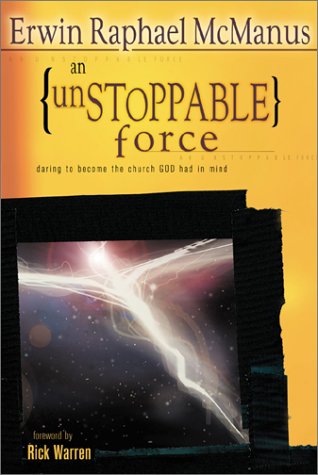
"The biting truth is that this country in not rejecting spirituality but Christianity. The indictment that we must receive is tha the Christian faith as we express it is no longer seen as a viable spiritual option. Masses gave the church a try and left wanting. We accuse them of not being willing to surrender to God; they accuse us of not knowing him. People are rejecting Christ because of the church! Once we were called Christians by an unbelieving world, and now we call ourselves Christians and the world calls us hypocrites. Is it possible that it wasn't the nation that was becoming dangerously secular but the church? We were neither relevant nor transcendent. We have become, in the worst of ways, religious." an Unstoppable Force, p. 29
The key to this indictment is in the way we express our faith. It may make sense to insiders, people who know the "codes". But to outsiders it comes across as rules and meetings. Who needs that? People are looking for relationship and transcendance.
I say all this to underscore the fact that a big reason that people don't want to come to church has nothing to do with them and everything to do with us! People are looking for something to give their life to, even die for and our message is not compelling. We have drifted far from the faith of the first disciples. So... before we are quick to point the finger at the unchurched, let's look in the mirror and ask where we've gone wrong. That level of honesty alone is attractive.
I agree that it is safe to assume that people have at least a minimal faith/belief in God. Polls have continually indicated that throughout the years. The church has warned of our nation turning away from God but that hasn't happened. There is a greater interest in spirituality than ever before. But people have been turning away from "our" kind of God - the Chrisitian God. And why is that? Erwin McManus puts it well...
"The biting truth is that this country in not rejecting spirituality but Christianity. The indictment that we must receive is tha the Christian faith as we express it is no longer seen as a viable spiritual option. Masses gave the church a try and left wanting. We accuse them of not being willing to surrender to God; they accuse us of not knowing him. People are rejecting Christ because of the church! Once we were called Christians by an unbelieving world, and now we call ourselves Christians and the world calls us hypocrites. Is it possible that it wasn't the nation that was becoming dangerously secular but the church? We were neither relevant nor transcendent. We have become, in the worst of ways, religious." an Unstoppable Force, p. 29
The key to this indictment is in the way we express our faith. It may make sense to insiders, people who know the "codes". But to outsiders it comes across as rules and meetings. Who needs that? People are looking for relationship and transcendance.
I say all this to underscore the fact that a big reason that people don't want to come to church has nothing to do with them and everything to do with us! People are looking for something to give their life to, even die for and our message is not compelling. We have drifted far from the faith of the first disciples. So... before we are quick to point the finger at the unchurched, let's look in the mirror and ask where we've gone wrong. That level of honesty alone is attractive.
Wednesday, May 25, 2005
Why People Don't Attend Church
Currently reading

Imagine this...you are driving down the road and you see a sign outside a house that says, "Join us for a free supper every Monday night." Would you go? Maybe if you were really hungry or very lonely. But odds are you wouldn't even think twice about the offer. Why? Well, you don't know what's going to happen. You don't know if you'll fit in. You don't want to go and feel trapped. Plus, what if the food is bad?
If you could just go, eat and leave without any further commitment, you might consider it. But what are the chances of that happening? There's probably a catch. People don't typically offer free meals. Even if you heard that there is not a catch, the people are really nice and the food is fantastic, you might still not go. You just don't want to feel awkward or like you are taking advantage of them.
I think these same feelings are why many people don't attend church. There are obviously other reasons (and I'll get to them) but these are the most basic ones. It's especially awkward if you don't have any church experience. You don't know what to expect and you don't want to stand out as a novice. As good as the church service might be and no matter how many people recommended it, you choose to stay home.
Lesson: If the neighborhood diner wants me to come, there are a few things he/she could do. One, if I could meet the home owner outside of the dinner context that would help - less pressure. Or maybe they could have the meal outside so I can stop casually and keep going. Or putting a brochure in my hand that explains what the dinner is all about would help me better understand what goes on and why.
In the same way, churches need to break down the discomfort factor to encourage people to join them. People often ask me how they can get their friend to come to church. I tell them that the best first step is to get the church to them. A website is a great entry point to experience a church in the comfort of your home. On the Cedarbrook site, you can request a free dvd with a recorded service and an interview with me. That way your first experience at church isn't completely new. We also take "church" to the park once or twice in the summer. People can stand back and simply observe what a service looks like from afar. And we have done special productions at the local theatre during the holidays.
If churches expect people to always come to them, they might be waiting a long time. That's fairly presumptuous. They have to give people a reason to come, not just expect them to show up because "it's the right thing to do." And the reason has to be strong enough to overcome the discomfort factor.
Stay tuned for more thoughts on why people don't attend church.
Tuesday, May 24, 2005
Maybe You're a Reformer at Heart
Have you ever wondered what's wrong with you? Why you don't fit in? Why the crowd seems to be so content while you sit back with your unanswered questions? I have.
In fact, the other day I was speaking with a pastor friend of mine and we both shared our reservations about church - an odd thing for pastors to admit. But we both felt like we are often out of step with the masses. Most of what exists as church today only frustrates us. Then we fall into the guilt of feeling like there must be something wrong with US. Why are we so critical? Can't we just be happy with the way things are?
If you share my discontent, take heart. You may not be as big of a misfit as you think. What might be happening is that YOU see things clearly. Rather than let your discontent repel you from the church and learn to keep quiet, maybe you need to do just the opposite... embrace the church and speak your mind. It may actually be the mind of God. Did you ever think of that?
Before Cedarbrook Church started I taught a series of messages on the book of Nehemiah (these were meetings that we had before we officially opened). We learned that vision always starts with discontent. The visionary has something in mind that isn't yet in place. It's out of that sense of frustration that they are moved to take action. They move to bring what's in their mind into reality (often in the face of opposition).
Unfortunately, many visionaries assume that they are mere malcontents. They feel that they are better off to stay out of the church in order to not "infect" anyone with their strange thinking. But I believe some of the church's best people are currently on the outside looking in. If the church is going to become who God meant it to be, we HAVE to bring these visionaries inside of the church, make room for them and affirm them.
Let me be the first to affirm you in your contrarian thinking and invite you to bring it into the church. If you get kicked out of a few in the process, that's okay. Keep trying. You can always move to Menomonie and join Cedarbrook! Some of our best leaders have been reeled in from the fringes.
Over the next few days I will be looking at what it is about church that keeps so many good people away and the lessons we can learn. I hope you'll join me, invite a fellow discontent and even add your two cents worth to the discussion. Stay tuned.
In fact, the other day I was speaking with a pastor friend of mine and we both shared our reservations about church - an odd thing for pastors to admit. But we both felt like we are often out of step with the masses. Most of what exists as church today only frustrates us. Then we fall into the guilt of feeling like there must be something wrong with US. Why are we so critical? Can't we just be happy with the way things are?
If you share my discontent, take heart. You may not be as big of a misfit as you think. What might be happening is that YOU see things clearly. Rather than let your discontent repel you from the church and learn to keep quiet, maybe you need to do just the opposite... embrace the church and speak your mind. It may actually be the mind of God. Did you ever think of that?
Before Cedarbrook Church started I taught a series of messages on the book of Nehemiah (these were meetings that we had before we officially opened). We learned that vision always starts with discontent. The visionary has something in mind that isn't yet in place. It's out of that sense of frustration that they are moved to take action. They move to bring what's in their mind into reality (often in the face of opposition).
Unfortunately, many visionaries assume that they are mere malcontents. They feel that they are better off to stay out of the church in order to not "infect" anyone with their strange thinking. But I believe some of the church's best people are currently on the outside looking in. If the church is going to become who God meant it to be, we HAVE to bring these visionaries inside of the church, make room for them and affirm them.
Let me be the first to affirm you in your contrarian thinking and invite you to bring it into the church. If you get kicked out of a few in the process, that's okay. Keep trying. You can always move to Menomonie and join Cedarbrook! Some of our best leaders have been reeled in from the fringes.
Over the next few days I will be looking at what it is about church that keeps so many good people away and the lessons we can learn. I hope you'll join me, invite a fellow discontent and even add your two cents worth to the discussion. Stay tuned.
Monday, May 23, 2005
Book: an Unstoppable Force
I'm currently reading (among a few others) an Unstoppable Force by Erwin McManus. McManus mentions that when he was a young pastor he was a part of a church that was on the verge of extinction. They had $20,000 left in their account and they were protecting it like it was the cure for cancer. Erwin suggested that they invest that money in reaching out to the community. But his other leaders quickly objected saying, "But we must survive!"
McManus said that they should either reach their city with that money or die trying. His comment on that experience was "Once survival has become our supreme goal, we have lost our way."
I was at a church conference last Friday and they asked the question, "What are you willing to go out of business for?" In other words, what's so important to you as a church (or business) that you are willing to risk it all, and if you fail, you aren't ashamed because you know you died trying.
I'm afraid too many churches are like McManus' church. They aren't willing to go out of business. They just want to survive. They think that merely existing is somehow virtuous. But it's in risking it all that the church has found it's true self and ultimately grown. McManus notes the martyrs of the faith. They didn't survive. They went out in flames...literally. But, as has been said...The blood of the martyrs is the seed of the church.
I'm challenged by these thoughts because Cedarbrook has taken risks from day one. I want to keep it that way. Now that we have some money in the bank I don't want "survival" to become our goal. Our goal has to continually be to reach more people, more effectively with the good news that God is pursuing us in Jesus.
If you want to check out this book, click here.
McManus said that they should either reach their city with that money or die trying. His comment on that experience was "Once survival has become our supreme goal, we have lost our way."
I was at a church conference last Friday and they asked the question, "What are you willing to go out of business for?" In other words, what's so important to you as a church (or business) that you are willing to risk it all, and if you fail, you aren't ashamed because you know you died trying.
I'm afraid too many churches are like McManus' church. They aren't willing to go out of business. They just want to survive. They think that merely existing is somehow virtuous. But it's in risking it all that the church has found it's true self and ultimately grown. McManus notes the martyrs of the faith. They didn't survive. They went out in flames...literally. But, as has been said...The blood of the martyrs is the seed of the church.
I'm challenged by these thoughts because Cedarbrook has taken risks from day one. I want to keep it that way. Now that we have some money in the bank I don't want "survival" to become our goal. Our goal has to continually be to reach more people, more effectively with the good news that God is pursuing us in Jesus.
If you want to check out this book, click here.
Wednesday, May 18, 2005
Five Myths About Change
Speaking of change...Fast Company magazine discusses it in their May issue. Consider these myths (my thoughts are in blue)...
Myth: Crisis is a powerful impetus for change.
Reality: Ninety percent of patients who've had coronary bypasses don't sustain changes in the unhealthy lifestyles that worsen their severe heart disease and greatly threaten their lives.
I think he put it awkwardly but the point is, sustaining change is hard. Even the threats of death and hell don't always help.
Myth: Change is motivated by fear.
Reality: It's too easy for people to go into denial of the bad things that might happen to them. Compelling, positive visions of the future are a much stronger inspiration for change.
I'm guilty of preaching a positive message. You won't often see me pointing my finger at people on Sunday morning. Am I soft? No, I've just learned the hard way that being negative doesn't work. More importantly, I've seen the change that comes when you cast a vision of hope.
Myth: The facts will set us free.
Reality: Our thinking is guided by narratives, not facts. When a fact doesn't fit our conceptual "frames" -- the metaphors we use to make sense of the world -- we reject it. Also, change is inspired best by emotional appeals rather than factual statements.
Christians often fear being "emotional". It has it's drawbacks, but God gave us emotion to move us to do things that we wouldn't normally do without it. Sometimes we choose poorly in a moment of high emotion. But other times our emotion moves us take the risk necessary to make a God directed change. Wisdom (God's Spirit within us) knows when to act in the heat of the moment and when to walk away.
Myth: Small, gradual changes are always easier to make and sustain.
Reality: Radical, sweeping changes are often easier because they quickly yield benefits.
When people take small steps, it's easy to justify "going back" because it's almost imperceptible - no one knows if you are back-slidding or not because you never changed that much to begin with. But Jesus called his disciples to sell everything they had. He called them to die to themselves. When we make big commitments we often paint ourselves into a corner, forcing us to follow through on our commitment.
Myth: We can't change because our brains become "hardwired" early in life.
Reality: Our brains have extraordinary "plasticity," meaning that we can continue learning complex new things throughout our lives -- assuming we remain truly active and engaged.
The apostle Paul talked about being transformed "by the renewing of the mind." Science bears this out. Renew the mind and change will follow.
Want to read the whole article on change (fascinating stuff!), click here.
Myth: Crisis is a powerful impetus for change.
Reality: Ninety percent of patients who've had coronary bypasses don't sustain changes in the unhealthy lifestyles that worsen their severe heart disease and greatly threaten their lives.
I think he put it awkwardly but the point is, sustaining change is hard. Even the threats of death and hell don't always help.
Myth: Change is motivated by fear.
Reality: It's too easy for people to go into denial of the bad things that might happen to them. Compelling, positive visions of the future are a much stronger inspiration for change.
I'm guilty of preaching a positive message. You won't often see me pointing my finger at people on Sunday morning. Am I soft? No, I've just learned the hard way that being negative doesn't work. More importantly, I've seen the change that comes when you cast a vision of hope.
Myth: The facts will set us free.
Reality: Our thinking is guided by narratives, not facts. When a fact doesn't fit our conceptual "frames" -- the metaphors we use to make sense of the world -- we reject it. Also, change is inspired best by emotional appeals rather than factual statements.
Christians often fear being "emotional". It has it's drawbacks, but God gave us emotion to move us to do things that we wouldn't normally do without it. Sometimes we choose poorly in a moment of high emotion. But other times our emotion moves us take the risk necessary to make a God directed change. Wisdom (God's Spirit within us) knows when to act in the heat of the moment and when to walk away.
Myth: Small, gradual changes are always easier to make and sustain.
Reality: Radical, sweeping changes are often easier because they quickly yield benefits.
When people take small steps, it's easy to justify "going back" because it's almost imperceptible - no one knows if you are back-slidding or not because you never changed that much to begin with. But Jesus called his disciples to sell everything they had. He called them to die to themselves. When we make big commitments we often paint ourselves into a corner, forcing us to follow through on our commitment.
Myth: We can't change because our brains become "hardwired" early in life.
Reality: Our brains have extraordinary "plasticity," meaning that we can continue learning complex new things throughout our lives -- assuming we remain truly active and engaged.
The apostle Paul talked about being transformed "by the renewing of the mind." Science bears this out. Renew the mind and change will follow.
Want to read the whole article on change (fascinating stuff!), click here.
Monday, May 16, 2005
The Change Process
I've been a student of change the last five or six years. The whole topic is fascinating to me; both organizational change and personal change. From an organizational standpoint it's interesting what it takes to help a group through the change process without freaking them out! And from the personal side, it's interesting what it takes to help people make lasting change.
From my experience in working with people, I see four things necessary to bring about lasting change;
From my experience in working with people, I see four things necessary to bring about lasting change;
- Good information. Learn as much as you can about your problem. Your knowledge may not change anything, but just understanding the problem and it's source is reassuring. It's reassuring to know that you aren't the only one with the problem - that it's SO common that there are books written about it. When I teach on shame people are always amazed that there are distinct causes for their feeling worthless. When they see the cause and effect relationship it gives them a lot of hope. Plus, in some cases, information alone can bring change. I have people tell me all the time that they applied one of my sermons and it changed their life.
- Prayer. I know people who have heard every sermon and read every book on a subject and they still have no clue how to change. But I've been able to sit down with some of these people and pray with them and the change they've longed for hits them like a lightning bolt. Why does God choose to move through prayer? Three reasons: one, he gets the credit. If it was just you doing or thinking something, you'd leave God out of the equation. Two, praying WITH someone else brings your problem out of the closet and into the open. Three, God likes to work through other people. The process develops relationship and God is all about that.
- Discipline. You may have a true heart change but remain unchanged simply because you have developed bad habits through the years. This is the piece that many people leave out and then wonder why they slipped back into their problem.
- Support. God almost always brings change through other people. If you think you can find healing on your own...good luck. Odds are it won't work. Find yourself a good group of friends who will stick with you even when you keep messing up. Give them the right to hold you accountable.
Thursday, May 12, 2005
How to NOT Change the World
When I run out of insight, it's nice to know I can always borrow from someone else's blog! Sam Rima is a professor at Bethel Seminary in St. Paul. He is a nationally known expert in the area of leadership. Below I've quoted him from his blog today. He's commenting here on a speech given last night by Erwin McManus.
One of the comments [McManus] made that truly ressonates with me was, "If you really want to change the world, the last place you would want to be is in the majority of American churches." Our focus in the church has been trying to discover just the right system or formula to bring the organization that we hope will make us effective. We see the church in very mechanistic terms. In fact, we have organized the life and fluidity out of the church. The problem, as Erwin articulated it, is that our churches are TOO organized! We need to seek ways to create a little more chaos and disorganization. We have procedures and policies for absolutely everything! That is certainly true at FBC [that's Sam's church] ... we have organized the life out of the church!
Erwin also made the tongue-in-cheek (or maybe not!) comment that the most organized place on earth is a cemetary! Everyone is in their place; no one is causing problems; no chaos or confusion - just perfect order! His challenge was to consider:
(1) Whether our personal life and the life of our church are characterized by a faith that proves to the world God is truly alive. Are we taking risks for Him?
(2) Whether or not we are known by love - God's unconditional love. Do we and our church make people the highest value? Or are people simply seen as giving units, attendance figures, projects, or problems waiting to be solved? The essence of the church should be our love for one another and the world.
(3) Whether or not we are being a voice of hope to the world. Do we give people a sense of hope and encouragement to tackle the challenges and rapids of this life?
I appreciate what Dr. Rima said about mechanizing the church. I'm continually tempted to resort to a formula to bring the results I think we "need". But one thing that we've done "right" so far at Cedarbrook is we haven't let the cement set around anything. Nothing is set in stone. Everything is pretty fluid. It's that fluidity that keeps us walking in faith (and a bit of terror!) but it keeps things fresh and real. Thanks to Sam and Erwin McManus. (McManus is the pastor of Mosaic Church in Los Angeles and an author of some great through provoking books).
One of the comments [McManus] made that truly ressonates with me was, "If you really want to change the world, the last place you would want to be is in the majority of American churches." Our focus in the church has been trying to discover just the right system or formula to bring the organization that we hope will make us effective. We see the church in very mechanistic terms. In fact, we have organized the life and fluidity out of the church. The problem, as Erwin articulated it, is that our churches are TOO organized! We need to seek ways to create a little more chaos and disorganization. We have procedures and policies for absolutely everything! That is certainly true at FBC [that's Sam's church] ... we have organized the life out of the church!
Erwin also made the tongue-in-cheek (or maybe not!) comment that the most organized place on earth is a cemetary! Everyone is in their place; no one is causing problems; no chaos or confusion - just perfect order! His challenge was to consider:
(1) Whether our personal life and the life of our church are characterized by a faith that proves to the world God is truly alive. Are we taking risks for Him?
(2) Whether or not we are known by love - God's unconditional love. Do we and our church make people the highest value? Or are people simply seen as giving units, attendance figures, projects, or problems waiting to be solved? The essence of the church should be our love for one another and the world.
(3) Whether or not we are being a voice of hope to the world. Do we give people a sense of hope and encouragement to tackle the challenges and rapids of this life?
I appreciate what Dr. Rima said about mechanizing the church. I'm continually tempted to resort to a formula to bring the results I think we "need". But one thing that we've done "right" so far at Cedarbrook is we haven't let the cement set around anything. Nothing is set in stone. Everything is pretty fluid. It's that fluidity that keeps us walking in faith (and a bit of terror!) but it keeps things fresh and real. Thanks to Sam and Erwin McManus. (McManus is the pastor of Mosaic Church in Los Angeles and an author of some great through provoking books).
Monday, May 09, 2005
A Word of Hope
The following is an article that will be published in the Dunn County News this week. Maybe you'd like to consider forwarding it to a friend who is discouraged. Click on the link below (the envelope with the arrow)...
A reporter from the New York Times once interviewed Marilyn Monroe. The reporter knew that during her early years Marilyn had been passed from one foster home to another. So the reporter asked her, "Did you ever feel loved by any of the foster families with whom you lived?" Marilyn replied, "Once, when I was about seven or eight. The woman I was living with was putting on makeup, and I was watching her. She was in a happy mood, so she reached over and patted my cheeks with her rouge puff…For that moment, I felt loved by her."
Isn’t that sad – that after reflecting on a lifetime of relationships that a person can only think of a sixty second time frame that they felt loved? Marilyn Monroe was a success as a movie star but failed in life. After three broken marriages, she died in her sleep at the age of 36. I have to wonder if her death didn’t ultimately come from her never having been truly loved.
As sad as Monroe’s story is, it’s not uncommon. People tumble through life looking for someone, sometimes anyone, to tell them that they are valuable – that they matter. Psychologists tell us that our deepest need is to belong- to be intimately connected to others in relationship. The Bible puts it this way, “It’s not good for man to be alone” (Genesis 2:18).
This sense of belonging is initially established through parental bonds. The bonding process begins right after birth when the baby is placed in the mother’s arms. Here, the child gains a sense of safety and security. As the child grows the bond is strengthened through different acts of love; the parents tuck them in at night, they look them in the eye and listen to their stories at meal times, the parents comfort their pain and wipe their tears and encourage them when their child is afraid. Plus, the parent shows up when the principal calls or, even worse, the police - about their child’s misbehavior. All of these communicate love to a child and helps develop a bond with them.
Bonding has to do with making a solid connection. It has to do with knowing that you are loved unconditionally – that there’s nothing you can do that will separate you from the love of your parent or loved one. Psychologist, John Townshend says…
“The best way to define bonding at its core is to say that when I am bonded, I “matter” to someone. When we are bonded to another person, we feel that we make a difference to him, that our presence is desired when we are around and missed when we are absent. This sense of “mattering” is in direct contrast to feeling overlooked, forgotten, or even simply tolerated.” Secrets of the Family Tree, page 148.
As natural as bonding should be between a parent and their child, it doesn’t always happen. The cares of our busy life quickly distract us and it’s easy to communicate the wrong message to our kids. In a survey of hundreds of children, one researcher (Delmer Holbrook) came up with the top three responses that fathers’ give their children’s requests to do something. The number one response? "I'm too tired". Second place: "We don't have enough money" And third place: "Keep quiet". These statements may be true, but are nevertheless alienating to a child looking to be affirmed and embraced.
A child’s parental bond is foundational to their future emotional health. Without it, they are uncertain of their worth, and will look high and low to find the affirmation for which their soul longs. The longer a person goes without the affirmation they need the more desperate they become to satisfy it. Morals that were once held close may be abandoned to widen the circle of possible relationships. Coexisting with this search is often a drive to perform, to achieve, to somehow prove to themselves and others that they are valuable. But if they fail, the pain is often so great that they turn to something to numb the pain. Alcohol or meth are cheap and easy to obtain. But other, more socially acceptable painkillers exist like work, exercising, shopping or eating. It’s not hard to understand how Marilyn Monroe finally gave up the quest.
By now you are probably depressed, aware of this vain search in your own life or having observed it in someone you know. If you are a parent, you may have a string of regrets for having failed to bond with your child and affirm them in the way that they needed. But we aren’t without hope. Thankfully we aren’t one or two dimensional beings. We have a spiritual dimension that we often overlook. God can provide us with the “stamp of approval” that we may have lacked from our parents or significant others.
Many people find the thought of an invisible God meeting this foundational need for bonding to be ridiculous. It’s too personal for a distant God with better things on his mind. Not true. The Bible tells us that we are foremost on God’s mind and he’s waiting to prove that to you.
The prophet Isaiah tells us that God “longs to be kind to us” as if he is in a waiting room counting the minutes until we give him the chance. Isaiah also uses vivid imagery to communicate God’s word. To a people who seriously doubt God’s love and concern he says…
Can a mother forget her nursing child? Can she feel no love for a child she has borne? But even if that were possible, I would not forget you! See, I have written your name on my hand. Isaiah 49: 15,16
The Bible is emphatic. We matter to God. He desires our presence and he misses us when we are absent. He is waiting to bond with us if we will let him. How can God do that? First, he speaks to us words of love and commitment (like through Isaiah). Then he shows us his love like he did through Jesus. The Bible tells us that… God demonstrates his own love for us in this: While we were still sinners, Christ died for us. Romans 5:8. And finally,, God sends his Spirit, as an inner witness, to give us the assurance of His love and our value. Again, in the book of Romans it says, “God has poured out his love into our hearts by the Holy Spirit, whom he has given us” (5:5).
I write today in hope of finding the Marilyn Monroe’s in this area who have given up the quest. You’ve exhausted all your options and you have resigned yourself to three painful options; enduring the pain, numbing the pain or ending the pain. I want you to know that there is a God who has your name written on his hand who is anxiously waiting to show you his kindness. He’s not looking for great religious acts but a simple invitation to enter your life and reveal the full extent of his love to you. I’ve had the pleasure of seeing God transform countless people in this way. Why not add your name to this list?
A reporter from the New York Times once interviewed Marilyn Monroe. The reporter knew that during her early years Marilyn had been passed from one foster home to another. So the reporter asked her, "Did you ever feel loved by any of the foster families with whom you lived?" Marilyn replied, "Once, when I was about seven or eight. The woman I was living with was putting on makeup, and I was watching her. She was in a happy mood, so she reached over and patted my cheeks with her rouge puff…For that moment, I felt loved by her."
Isn’t that sad – that after reflecting on a lifetime of relationships that a person can only think of a sixty second time frame that they felt loved? Marilyn Monroe was a success as a movie star but failed in life. After three broken marriages, she died in her sleep at the age of 36. I have to wonder if her death didn’t ultimately come from her never having been truly loved.
As sad as Monroe’s story is, it’s not uncommon. People tumble through life looking for someone, sometimes anyone, to tell them that they are valuable – that they matter. Psychologists tell us that our deepest need is to belong- to be intimately connected to others in relationship. The Bible puts it this way, “It’s not good for man to be alone” (Genesis 2:18).
This sense of belonging is initially established through parental bonds. The bonding process begins right after birth when the baby is placed in the mother’s arms. Here, the child gains a sense of safety and security. As the child grows the bond is strengthened through different acts of love; the parents tuck them in at night, they look them in the eye and listen to their stories at meal times, the parents comfort their pain and wipe their tears and encourage them when their child is afraid. Plus, the parent shows up when the principal calls or, even worse, the police - about their child’s misbehavior. All of these communicate love to a child and helps develop a bond with them.
Bonding has to do with making a solid connection. It has to do with knowing that you are loved unconditionally – that there’s nothing you can do that will separate you from the love of your parent or loved one. Psychologist, John Townshend says…
“The best way to define bonding at its core is to say that when I am bonded, I “matter” to someone. When we are bonded to another person, we feel that we make a difference to him, that our presence is desired when we are around and missed when we are absent. This sense of “mattering” is in direct contrast to feeling overlooked, forgotten, or even simply tolerated.” Secrets of the Family Tree, page 148.
As natural as bonding should be between a parent and their child, it doesn’t always happen. The cares of our busy life quickly distract us and it’s easy to communicate the wrong message to our kids. In a survey of hundreds of children, one researcher (Delmer Holbrook) came up with the top three responses that fathers’ give their children’s requests to do something. The number one response? "I'm too tired". Second place: "We don't have enough money" And third place: "Keep quiet". These statements may be true, but are nevertheless alienating to a child looking to be affirmed and embraced.
A child’s parental bond is foundational to their future emotional health. Without it, they are uncertain of their worth, and will look high and low to find the affirmation for which their soul longs. The longer a person goes without the affirmation they need the more desperate they become to satisfy it. Morals that were once held close may be abandoned to widen the circle of possible relationships. Coexisting with this search is often a drive to perform, to achieve, to somehow prove to themselves and others that they are valuable. But if they fail, the pain is often so great that they turn to something to numb the pain. Alcohol or meth are cheap and easy to obtain. But other, more socially acceptable painkillers exist like work, exercising, shopping or eating. It’s not hard to understand how Marilyn Monroe finally gave up the quest.
By now you are probably depressed, aware of this vain search in your own life or having observed it in someone you know. If you are a parent, you may have a string of regrets for having failed to bond with your child and affirm them in the way that they needed. But we aren’t without hope. Thankfully we aren’t one or two dimensional beings. We have a spiritual dimension that we often overlook. God can provide us with the “stamp of approval” that we may have lacked from our parents or significant others.
Many people find the thought of an invisible God meeting this foundational need for bonding to be ridiculous. It’s too personal for a distant God with better things on his mind. Not true. The Bible tells us that we are foremost on God’s mind and he’s waiting to prove that to you.
The prophet Isaiah tells us that God “longs to be kind to us” as if he is in a waiting room counting the minutes until we give him the chance. Isaiah also uses vivid imagery to communicate God’s word. To a people who seriously doubt God’s love and concern he says…
Can a mother forget her nursing child? Can she feel no love for a child she has borne? But even if that were possible, I would not forget you! See, I have written your name on my hand. Isaiah 49: 15,16
The Bible is emphatic. We matter to God. He desires our presence and he misses us when we are absent. He is waiting to bond with us if we will let him. How can God do that? First, he speaks to us words of love and commitment (like through Isaiah). Then he shows us his love like he did through Jesus. The Bible tells us that… God demonstrates his own love for us in this: While we were still sinners, Christ died for us. Romans 5:8. And finally,, God sends his Spirit, as an inner witness, to give us the assurance of His love and our value. Again, in the book of Romans it says, “God has poured out his love into our hearts by the Holy Spirit, whom he has given us” (5:5).
I write today in hope of finding the Marilyn Monroe’s in this area who have given up the quest. You’ve exhausted all your options and you have resigned yourself to three painful options; enduring the pain, numbing the pain or ending the pain. I want you to know that there is a God who has your name written on his hand who is anxiously waiting to show you his kindness. He’s not looking for great religious acts but a simple invitation to enter your life and reveal the full extent of his love to you. I’ve had the pleasure of seeing God transform countless people in this way. Why not add your name to this list?
Monday, May 02, 2005
Mom, Experience & Theology
I wonder how much a person's experience influences their theology. I'd imagine it must be quite a bit. For example, I grew up spending a lot of time with my mother. My dad worked rotating shifts and my siblings were much older so it was often me and mom for supper. Plus, we lived out in the country so it wasn't like I was running around the neighborhood with a pack of friends. I'd often do things with my mom like play tennis, or golf or go skiing. We had a lot of fun with a lot of great conversations over meals.
With that background, maybe it's not too much of a surprise that when I read the Bible I see God using women freely and I quickly see scripture that affirms women in leadership roles. But, as some of you know, there is a pretty strong divide in the church over this issue. Others see verses that support women playing a much diminished role. They think women should never be in key leadership positions and never teach men. My guess is that if you did the research you'd find that past experiences with mom's and other women have a big impact on how people interpret scripture on this issue.
I'm thankful that God gave me a positive experience, not only with my mom, but with other women. I've often worked either with or for women in business settings with good results. And I can't forget my wife and daughters. I know that they too have influenced my thinking. Lisa is one of the most intelligent, trustworthy people I know. And both of my daughters are sharp as tacks with big hearts for God. I would never hesitiate to promote any one of them into leadership roles in my charge.
I know that Cedarbrook Church wouldn't be who it is without our women leaders. There are too many for me to attempt to name and do them justice in this small space. But those who attend Cedarbrook know who I'm talking about. God has filled them with his Spirit and used them to touch hundreds of lives and build the ministry.
If you are a women and have been diminished by people in your life, I want to encourage you that those experiences aren't accurate reflections of either your personal worth or how God wants to use you. Don't let small minds control you. Let God's Spirit be the one that affirms and directs you in this coming year.
With that background, maybe it's not too much of a surprise that when I read the Bible I see God using women freely and I quickly see scripture that affirms women in leadership roles. But, as some of you know, there is a pretty strong divide in the church over this issue. Others see verses that support women playing a much diminished role. They think women should never be in key leadership positions and never teach men. My guess is that if you did the research you'd find that past experiences with mom's and other women have a big impact on how people interpret scripture on this issue.
I'm thankful that God gave me a positive experience, not only with my mom, but with other women. I've often worked either with or for women in business settings with good results. And I can't forget my wife and daughters. I know that they too have influenced my thinking. Lisa is one of the most intelligent, trustworthy people I know. And both of my daughters are sharp as tacks with big hearts for God. I would never hesitiate to promote any one of them into leadership roles in my charge.
I know that Cedarbrook Church wouldn't be who it is without our women leaders. There are too many for me to attempt to name and do them justice in this small space. But those who attend Cedarbrook know who I'm talking about. God has filled them with his Spirit and used them to touch hundreds of lives and build the ministry.
If you are a women and have been diminished by people in your life, I want to encourage you that those experiences aren't accurate reflections of either your personal worth or how God wants to use you. Don't let small minds control you. Let God's Spirit be the one that affirms and directs you in this coming year.
Thursday, April 28, 2005
Our Desire for Perfection
I watched "The Apprentice" again tonight. I wish I liked the people better. They all seem to be so self-absorbed. But I still like watching it because it's a great study in human nature and decision making.
There's nothing like pressure to bring out the best and the worst in us. The amazing thing about this show is that these people are supposedly the "best of the best" - chosen from a million applicants! Yet under pressure they all crack. You see their dark side - their pettiness, their pride, their self-preservation. This guy, Alex - he had it won tonight. He had it in the bag. But in the final moments - literally seconds - he lied to Trump. Then he did a poor job of covering his dishonesty. Trump fired him and it was a good call. Amazing.
The sad thing is that I'm just like Alex. So are you! Ah...the wonder of being human. No matter how polished we try to be we can't iron out all our wrinkles. We are permanently crooked. That's gotta make you wonder - Why is that? Why can't we get it right? It can't be that hard. But no one has gone to bed, or even to their grave, saying "I'm perfect. I can't improve. I've got this life thing down." Yet, most of us, keep trying. We don't give up. Something in us longs for perfection and we continue to pursue the dream- in our relationships, our character and for some of us, our golf game!
I think that's all a reflection of God. That drive, that longing, is put there by God. Why else would we be so resilient, so hopeful? What else explains the incredible come-backs that people have performed from Auschwitz to Lance Armstrong? Genetics? Survival of the species? No. I'm convinced that God is calling us back to himself through our desires. Ultimately, He is what we seek - the Perfection that we long for.
I believe what the Bible says, that one day we will meet God face to face - and then we will be satisfied. Then we will truly be at peace. But until then we don't have to bite our nails. We can know God now. The image is blurred and His voice is not always clear, but we aren't alone. He's with us. He speaks. And he brings fulfillment. As the apostle Paul said, God has given those who ask a downpayment of their future inheritance by sending his Spirit to live inside of them. It's not heaven. It's the appetizer for things to come.
There's nothing like pressure to bring out the best and the worst in us. The amazing thing about this show is that these people are supposedly the "best of the best" - chosen from a million applicants! Yet under pressure they all crack. You see their dark side - their pettiness, their pride, their self-preservation. This guy, Alex - he had it won tonight. He had it in the bag. But in the final moments - literally seconds - he lied to Trump. Then he did a poor job of covering his dishonesty. Trump fired him and it was a good call. Amazing.
The sad thing is that I'm just like Alex. So are you! Ah...the wonder of being human. No matter how polished we try to be we can't iron out all our wrinkles. We are permanently crooked. That's gotta make you wonder - Why is that? Why can't we get it right? It can't be that hard. But no one has gone to bed, or even to their grave, saying "I'm perfect. I can't improve. I've got this life thing down." Yet, most of us, keep trying. We don't give up. Something in us longs for perfection and we continue to pursue the dream- in our relationships, our character and for some of us, our golf game!
I think that's all a reflection of God. That drive, that longing, is put there by God. Why else would we be so resilient, so hopeful? What else explains the incredible come-backs that people have performed from Auschwitz to Lance Armstrong? Genetics? Survival of the species? No. I'm convinced that God is calling us back to himself through our desires. Ultimately, He is what we seek - the Perfection that we long for.
I believe what the Bible says, that one day we will meet God face to face - and then we will be satisfied. Then we will truly be at peace. But until then we don't have to bite our nails. We can know God now. The image is blurred and His voice is not always clear, but we aren't alone. He's with us. He speaks. And he brings fulfillment. As the apostle Paul said, God has given those who ask a downpayment of their future inheritance by sending his Spirit to live inside of them. It's not heaven. It's the appetizer for things to come.
Sunday, April 24, 2005
How Much of the Bible is Enough?
I've recently gotten a few comments back about my sermons not having enough scripture in them. I appreciate that. I love the Bible and I love a good sermon that helps me to understand it better. But some topics are hard to draw from any one Bible text. For example, my current series on "boundaries". There are some texts that show one or two aspects of boundaries but I can't think of any one text that teaches everything there is to know about boundaries. To cover all of the Bible necessary to make a good teaching would take months. I'm afraid I'd bore people to tears, and then it's not a good teaching!
So, as a speaker, I have a choice. I can spend my twenty five minutes surfing the Bible, taking a lot of time to tell one or two stories to make a few points, or I can spend my time making lots of points and make a few pertinent quotations from the Bible. I've chosen the latter. It may not satisfy the serious Bible student but it's really the only practical solution to my dilemma.
To satisfy people's need for more Bible verses, some preachers attach verses to their points in a forced way. I won't do that. That's not being intellectually honest with my listeners. The verse isn't being used to support the point. It's simply there to make people feel the sermon is more "biblical". But think about that. Does the volume of Bible quotations really make a sermon more biblical? Not at all. I've heard plenty of sermons, full of the Bible, that I think totally misrepresent God.
Read Paul's sermon in the book of Acts (17) to the Greeks. He didn't quote the Bible at all. He quoted their local poet. Yet Paul spoke truth that drew people to Jesus. There's a time to quote the Bible and there are times not to. I'm trying to find the right balance.
This summer we are going to do a study on the books of Psalms, Proverbs and Job. Hopefully that will satisfy those who are looking for more of the Bible.
So, as a speaker, I have a choice. I can spend my twenty five minutes surfing the Bible, taking a lot of time to tell one or two stories to make a few points, or I can spend my time making lots of points and make a few pertinent quotations from the Bible. I've chosen the latter. It may not satisfy the serious Bible student but it's really the only practical solution to my dilemma.
To satisfy people's need for more Bible verses, some preachers attach verses to their points in a forced way. I won't do that. That's not being intellectually honest with my listeners. The verse isn't being used to support the point. It's simply there to make people feel the sermon is more "biblical". But think about that. Does the volume of Bible quotations really make a sermon more biblical? Not at all. I've heard plenty of sermons, full of the Bible, that I think totally misrepresent God.
Read Paul's sermon in the book of Acts (17) to the Greeks. He didn't quote the Bible at all. He quoted their local poet. Yet Paul spoke truth that drew people to Jesus. There's a time to quote the Bible and there are times not to. I'm trying to find the right balance.
This summer we are going to do a study on the books of Psalms, Proverbs and Job. Hopefully that will satisfy those who are looking for more of the Bible.
Thursday, April 21, 2005
The New Reformation
I think that two hundred years from now people will look back on this generation and realize that these were the days when the church went through a Second Reformation. The first, of course, was started by Martin Luther with the Protestant Reformation. Luther objected to a religious system that favored the religious machine over the people themselves. The same is happening today, only in a different way.
Right now you can find churches that exist in two completely different worlds. The world that is passing away is one that is based on form and function. It focuses on what you do and what you know. Whether that's a focus on the liturgy of main line denominations (things like the sacraments) or the liturgy of the evangelicals (things like Bible teaching and singing), both are concerned about procedure - everything must be done appropriately to please God.
On the other hand, there are new churches that focus on being, on life change and on relationship. They too use the sacraments or Bible teaching as above, but they are a means to an end, not the end in themselves. In my opinion, it is this focus that breathes life and attracts people to God. People walk away sensing that they've encountered God while the former leaves people feeling empty and wondering if they did something wrong - maybe that's why church is so unfulfilling.
While I'm happy for the transition it also makes me sad because I feel out of touch with a large segment of the church. I'm not excited about what they are excited about. I used to be. But I'm not any more. And so a separation has taken place. I wish we could all walk together and share the same joy but I guess that is what transformation is about...a process.
Unfortunately the two extremes don't understand each other. We tend to call the former group backward and the latter group liberal. I've gotten my share of criticism, and to be honest, been critical of others. I hope we can make it through the next twenty years without doing too much damage to each other and God's name on earth. After all, it's all about Him, isn't it?
Right now you can find churches that exist in two completely different worlds. The world that is passing away is one that is based on form and function. It focuses on what you do and what you know. Whether that's a focus on the liturgy of main line denominations (things like the sacraments) or the liturgy of the evangelicals (things like Bible teaching and singing), both are concerned about procedure - everything must be done appropriately to please God.
On the other hand, there are new churches that focus on being, on life change and on relationship. They too use the sacraments or Bible teaching as above, but they are a means to an end, not the end in themselves. In my opinion, it is this focus that breathes life and attracts people to God. People walk away sensing that they've encountered God while the former leaves people feeling empty and wondering if they did something wrong - maybe that's why church is so unfulfilling.
While I'm happy for the transition it also makes me sad because I feel out of touch with a large segment of the church. I'm not excited about what they are excited about. I used to be. But I'm not any more. And so a separation has taken place. I wish we could all walk together and share the same joy but I guess that is what transformation is about...a process.
Unfortunately the two extremes don't understand each other. We tend to call the former group backward and the latter group liberal. I've gotten my share of criticism, and to be honest, been critical of others. I hope we can make it through the next twenty years without doing too much damage to each other and God's name on earth. After all, it's all about Him, isn't it?
Saturday, April 16, 2005
The Art of Preaching
I think preaching is an art in many ways. Today I'm thinking of the art of persuading people without manipulating or intimidating them.
Everyone knows when they are being "sold". We've all been in that uncomfortable position with a slick salesperson - it sounds good. You are reaching for your wallet but there's a small voice inside that says "He's not sincere. Don't do this. You'll regret it!" I don't want my listeners to have the same feeling when they hear me speak. So I try to show them that I respect their intellect.
I always speak with my listener in mind. I'm a cautious listener myself. I don't buy everything I'm being told in a speech (or a sales pitch). So I try to ask myself the critical question that I think my listener is asking at the time. I want to speak the answer to the natural question in their head so they say, "Hey, he anticipated that question...cool. I appreciate that."
I do that to show that I respect my audience. I don't think they are simple minded. They've got good questions and concerns that I need to address if I'm going to win them over. I never want to imply that they should simply check their brains at the door and believe everything that I say. That's insulting. If I want to help them see that God loves them and accepts them I need to start by showing them love and acceptance in how I speak.
So, even though I want to persuade people to what I consider is God's view (based on the Bible), I never want them to feel like I'm cramming "truth" down their throat. They have to buy every word and thought so they truly own it for themselves. I want them to not merely agree with me but be convinced that God has added to my words and spoken to them personally through his Spirit.
If that happens, that's the ultimate satisfaction - to have people sense that they heard from God somewhere in or around my speaking. But the quickest way to invalidate that experience is to cheapen it through manipulation or intimidation.
Everyone knows when they are being "sold". We've all been in that uncomfortable position with a slick salesperson - it sounds good. You are reaching for your wallet but there's a small voice inside that says "He's not sincere. Don't do this. You'll regret it!" I don't want my listeners to have the same feeling when they hear me speak. So I try to show them that I respect their intellect.
I always speak with my listener in mind. I'm a cautious listener myself. I don't buy everything I'm being told in a speech (or a sales pitch). So I try to ask myself the critical question that I think my listener is asking at the time. I want to speak the answer to the natural question in their head so they say, "Hey, he anticipated that question...cool. I appreciate that."
I do that to show that I respect my audience. I don't think they are simple minded. They've got good questions and concerns that I need to address if I'm going to win them over. I never want to imply that they should simply check their brains at the door and believe everything that I say. That's insulting. If I want to help them see that God loves them and accepts them I need to start by showing them love and acceptance in how I speak.
So, even though I want to persuade people to what I consider is God's view (based on the Bible), I never want them to feel like I'm cramming "truth" down their throat. They have to buy every word and thought so they truly own it for themselves. I want them to not merely agree with me but be convinced that God has added to my words and spoken to them personally through his Spirit.
If that happens, that's the ultimate satisfaction - to have people sense that they heard from God somewhere in or around my speaking. But the quickest way to invalidate that experience is to cheapen it through manipulation or intimidation.
Thursday, April 14, 2005
The Privilege of Pastoring
Someone asked me today if it wasn't wearing to counsel people all the time. I thought I should address that here because it's a common misperception.
Actually, counseling, and any pastoral "work" that brings me into the life of another person, is an honor. I really mean that. It's a privilege to be invited into the most personal part or time in someone's life. I'm invited into a person's most holy place - their "inner sanctum" so to speak. It's truly a holy moment to know that someone has trusted me (and trusted God by trusting me) to be that deep inside their life.
The other reason I like pastoring - specifically counseling - is that it is real. I don't deal with superficiality well. I know when people are giving me the fake smile and phony "happy" answers. I like hearing the truth and that's what I hear in counseling. I enjoy giving people permission to be honest without having to be "nice" or "spiritual" or anything like that. They can share all their thoughts and emotions without feeling like I'm going to tell them they are wrong or "unspiritual". There are few places you can be so honest. It's very rewarding to know that I serve that purpose in the lives of others.
The realness of counseling also helps me in my writing and speaking. When I write/speak, I'm not addressing lofty ideals. I'm addressing real life situations that I've helped people through at some time in the past. Or I'm relating how I suceeded or, more often, failed in life. That kind of reality makes my ministry that much more helpful.
I suppose some people would be bored or overwhelmed by such intimacy with people in these moments. But not me. I thank God all the time for the ministry he's given me.
Actually, counseling, and any pastoral "work" that brings me into the life of another person, is an honor. I really mean that. It's a privilege to be invited into the most personal part or time in someone's life. I'm invited into a person's most holy place - their "inner sanctum" so to speak. It's truly a holy moment to know that someone has trusted me (and trusted God by trusting me) to be that deep inside their life.
The other reason I like pastoring - specifically counseling - is that it is real. I don't deal with superficiality well. I know when people are giving me the fake smile and phony "happy" answers. I like hearing the truth and that's what I hear in counseling. I enjoy giving people permission to be honest without having to be "nice" or "spiritual" or anything like that. They can share all their thoughts and emotions without feeling like I'm going to tell them they are wrong or "unspiritual". There are few places you can be so honest. It's very rewarding to know that I serve that purpose in the lives of others.
The realness of counseling also helps me in my writing and speaking. When I write/speak, I'm not addressing lofty ideals. I'm addressing real life situations that I've helped people through at some time in the past. Or I'm relating how I suceeded or, more often, failed in life. That kind of reality makes my ministry that much more helpful.
I suppose some people would be bored or overwhelmed by such intimacy with people in these moments. But not me. I thank God all the time for the ministry he's given me.
Monday, April 11, 2005
Creating a Culture not a Program
I've been an observer of church life for about 30 years now. I haven't always been pleased with what I see. Church communities are often forced. People know how to talk about building community and take efforts to build community but I haven't seen a lot of church communities that strike me as authentic - that is - real people, expressing real joy and pain and finding true friendship with one another as well as God.
I guess that shouldn't surprise me. That's just the human condition. We are broken at a very deep level and intimacy is at the heart of our brokenness. But if God has come into our lives then I think we should be able to transcend this dilemma. We don't have to "fake it". We don't have to just have a shell that "looks" or sounds like community. I think we have the potential to experience the real deal.
Because of that I often resist trends to develop community out of a box. You can find lots of adult small group curriculum that promise that. But no program will create authenticity or intimacy. It has to be inspired by God, directed by God and given by God. And we have to be willing to long for it and wait for it without forcing it prematurely.
I long for that sense of authenticity and intimacy at Cedarbrook. I see glimpses of it and that excites me. Andre (youth pastor) has been thinking recently about the importance of "being" over "doing" and I think this is a big part of what I'm talking about. I much prefer to be a part of a group that longs for intimacy and authenticity (being) but has no idea how to achieve it than to be a part of a group that has the latest program that "looks" good (doing) but only goes through the motions of community and never achieves it.
As a leader, I think that it's more important for me to cast a vision for this kind of community - to stir our hearts - than to offer quick and easy solutions. Instead of developing programs we need to develop a culture that values authenticity and intimacy. If that is where our hearts are, it will happen. It's in the waiting and longing that causes the depth of our character and prepares us to embrace community when it develops.
How do we create a culture that breeds community? Boundaries play a role. Healthy boundaries have a lot to do with accepting people where they are and respecting them for who they are - not trying to force them to be like us. When boundaries are respected, then community is free to take root. We can relax and enjoy each other because we no longer have to fear being judged or rejected. We know that people accept us because of our inherant God-given value, not because we look or think like the crowd.
I'd love to hear your thoughts on this. I have the quietest readers in blogging history! What's up with that?????? : ) Click and share your thoughts. Thanks!
I guess that shouldn't surprise me. That's just the human condition. We are broken at a very deep level and intimacy is at the heart of our brokenness. But if God has come into our lives then I think we should be able to transcend this dilemma. We don't have to "fake it". We don't have to just have a shell that "looks" or sounds like community. I think we have the potential to experience the real deal.
Because of that I often resist trends to develop community out of a box. You can find lots of adult small group curriculum that promise that. But no program will create authenticity or intimacy. It has to be inspired by God, directed by God and given by God. And we have to be willing to long for it and wait for it without forcing it prematurely.
I long for that sense of authenticity and intimacy at Cedarbrook. I see glimpses of it and that excites me. Andre (youth pastor) has been thinking recently about the importance of "being" over "doing" and I think this is a big part of what I'm talking about. I much prefer to be a part of a group that longs for intimacy and authenticity (being) but has no idea how to achieve it than to be a part of a group that has the latest program that "looks" good (doing) but only goes through the motions of community and never achieves it.
As a leader, I think that it's more important for me to cast a vision for this kind of community - to stir our hearts - than to offer quick and easy solutions. Instead of developing programs we need to develop a culture that values authenticity and intimacy. If that is where our hearts are, it will happen. It's in the waiting and longing that causes the depth of our character and prepares us to embrace community when it develops.
How do we create a culture that breeds community? Boundaries play a role. Healthy boundaries have a lot to do with accepting people where they are and respecting them for who they are - not trying to force them to be like us. When boundaries are respected, then community is free to take root. We can relax and enjoy each other because we no longer have to fear being judged or rejected. We know that people accept us because of our inherant God-given value, not because we look or think like the crowd.
I'd love to hear your thoughts on this. I have the quietest readers in blogging history! What's up with that?????? : ) Click and share your thoughts. Thanks!
Jane Fonda, Insecurity & Faith
TIME magazine has an interesting article about Jane Fonda this past week. It's always interesting to me to see the common thread in everyone's life. The "verses" may be different in our lives but the song is the same. We all need to be affirmed and when we aren't, we malfunction.
Fonda said that she had "the disease to please" her father and every man in her life. Like a chameleon she became whatever she thought these men wanted her to become. When she failed at pleasing them she turned to an eating disorder to satisfy her insecurity - provoking a 30 year struggle with bulimia.
Yesterday I spoke in church about the three types of boundary disorders that people have. Either we enter people's space without their permission (The Space Invader) - we keep people out who should be in our space (The Wall) or we allow people into our space who shouldn't be there (The Sieve). ( You can download this here.)
Every one of us has a tendency to do at least one of these and they can all be boiled down to our insecurity and need to be affirmed. But if we were content in ourselves and confident of our value, we wouldn't have the need to do any of the above. And Jane Fonda wouldn't have had to live her life of pain either.
Is it too simple to think that we can find our sense of worth/value in God? It makes a lot of sense. If God says that we are valuable (not perfect, but valuable) then I don't have to jump through hoops to prove myself and win your approval. Just like the government determines the worth of the paper in our wallet, not me, God determines my value. Once I can grasp that then my performance in life flows out of my confidence rather than my fear of rejection.
The fact is - God has stated that we are valuable...so valuable that he manifested himself as a person (Jesus) and died for us. There is no stronger statement of our worth than that.
If you struggle in life finding acceptance and worth I want to point you to God - specifically Jesus. Ask him to reveal your worth to you from His perspective. If God says you are valuable, it really doesn't matter what you feel or others say. Let that truth permeate your being. Then take a deep breath and enjoy your life!
Fonda said that she had "the disease to please" her father and every man in her life. Like a chameleon she became whatever she thought these men wanted her to become. When she failed at pleasing them she turned to an eating disorder to satisfy her insecurity - provoking a 30 year struggle with bulimia.
Yesterday I spoke in church about the three types of boundary disorders that people have. Either we enter people's space without their permission (The Space Invader) - we keep people out who should be in our space (The Wall) or we allow people into our space who shouldn't be there (The Sieve). ( You can download this here.)
Every one of us has a tendency to do at least one of these and they can all be boiled down to our insecurity and need to be affirmed. But if we were content in ourselves and confident of our value, we wouldn't have the need to do any of the above. And Jane Fonda wouldn't have had to live her life of pain either.
Is it too simple to think that we can find our sense of worth/value in God? It makes a lot of sense. If God says that we are valuable (not perfect, but valuable) then I don't have to jump through hoops to prove myself and win your approval. Just like the government determines the worth of the paper in our wallet, not me, God determines my value. Once I can grasp that then my performance in life flows out of my confidence rather than my fear of rejection.
The fact is - God has stated that we are valuable...so valuable that he manifested himself as a person (Jesus) and died for us. There is no stronger statement of our worth than that.
If you struggle in life finding acceptance and worth I want to point you to God - specifically Jesus. Ask him to reveal your worth to you from His perspective. If God says you are valuable, it really doesn't matter what you feel or others say. Let that truth permeate your being. Then take a deep breath and enjoy your life!
Thursday, April 07, 2005
Does God Abandon Us?
Speaking of views of God (below), one false view I often hear from believers is that they think God "abandoned" them during a time of crisis. What kind of god would do that? I can't think of anything more crushing than to be left hanging at your moment of greatest need. In reality, what's probably happened is that the person in crisis thinks God has abandoned them because they don't think God is pleased with them. They, in essence, cut God out of their life because they think they "deserved" it. They have judged themselves unworthy and expect God to do the same. But the truth is that God is there all the time - undoubtedly sad at His inability to help the person because they shut him out.
I mention this in case you are in that place right now. Maybe you are going through a hard time (divorce? failing health? financial stress?) and you are tempted to think that things aren't turning around because God has left the scene. Trust me, God hasn't abandoned you. He's never far away. He's always near and quick to take our hand.
The truth is, many of our troubles are simply consequences of a long series of life decisions. God isn't going to magically fix our mistakes or even the offenses done by others to us. Rather, he promises to be with us through the hard times. Remember, the promise is that he will never leave you or forsake you. He walks with you through the fire. He doesn't snatch you from it. Just because your problems don't disappear doesn't mean that God has abandoned you. But if you'll reach out for his hand, he'll grab it and show you how to walk through these hard times and come to a place of new beginnings.
I mention this in case you are in that place right now. Maybe you are going through a hard time (divorce? failing health? financial stress?) and you are tempted to think that things aren't turning around because God has left the scene. Trust me, God hasn't abandoned you. He's never far away. He's always near and quick to take our hand.
The truth is, many of our troubles are simply consequences of a long series of life decisions. God isn't going to magically fix our mistakes or even the offenses done by others to us. Rather, he promises to be with us through the hard times. Remember, the promise is that he will never leave you or forsake you. He walks with you through the fire. He doesn't snatch you from it. Just because your problems don't disappear doesn't mean that God has abandoned you. But if you'll reach out for his hand, he'll grab it and show you how to walk through these hard times and come to a place of new beginnings.
Subscribe to:
Posts (Atom)