Sunday, August 14, 2005

How to Find Faith


Currently Reading Posted by Picasa

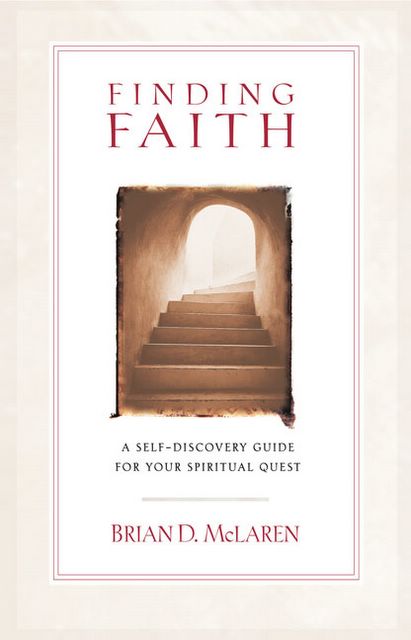
I've talked about a few Brian McLaren books in my posts. I've backed up to read one of his early one's called "Finding Faith". I'm so impressed with it that I decided to preach an eight week series on the topic. McLaren hits on a part of faith that seems to have gone untouched by other writers/speakers...how to come to faith. It's amazing that there are not more books like this but I guess that shows our "modern" mind-set (vs. a post-modern one).

The modern mind just wants the facts, thinking that the facts speak for themselves. The post-modern mind wants more. It wants context. It wants relationship. It wants to know how the "what" will play out on a daily basis. The post-modern person doesn't just believe because it's "the right thing to do". They believe because it makes their life better.

When I was a new believer I read books like "Know Why You Believe" and "Evidence that Demands a Verdict". These were books about what you need to know about Christianity, i.e. who Jesus was, what he did, why his death was important, etc. These are obviously important things but in the scheme of things, they are way down the line in the faith process. Before we can come to faith we really need to know how to believe first, then what to believe.

I'd love to hear back from my readers on where you are at in the faith process and how you got there. I haven't had much luck in getting people to post - I don't if it takes too much time or it's too intimidating to see your thoughts on-line, even though anonymous, but it would be a great discussion to hear from believers at various stages of faith and even non-believers who want to tell me why they don't have a faith.

  • What are your struggles?
  • What have been stumble blocks in your faith experience?
  • What made it easy?
  • How has it changed (or not changed) your life?

Over the past few decades, faith has been painted as very black and white in my circles. Either you are in or out with few, if any, shades of gray. But faith is a process. We are all at different points in the journey. We don't have to be ashamed of where we are at in the process. Some of us have hit a dead-end and need to back up and take another run at it. That's okay. Some times you have to tear down before you can build up.

So, let me hear from you. Take the time and the risk and let's hear what you have to say about your process of coming/not coming to faith. Thanks! I'm looking forward to hearing from you.

Wednesday, August 03, 2005

Finding True Freedom

I heard the author of the book "Smart Sex" on the radio the other day. I liked what she had to say about personal freedom. She said that the goal of everyone in our culture is to be unencumbered - that is, we seek to have as few restrictions on us as possible. We don't want anyone telling us what to do about our sex life or anything for that matter.

As I thought about that, I had to agree. Even my discussion below about casual dress is about our desire to be free of anyone telling us how to dress. We want as much personal freedom as possible with as few people telling us what to do as possible.

But the desire for personal freedom flies in the face of what it means to follow Jesus. There's not one part of our life that is "free" from the call of God. The true follower makes it their goal to give up their personal agenda/desire for personal freedom to align themselves with God's design.


The Christian message is a tough "sell" when seen in this light. Why would anyone want to give up their agenda for God's?

The answer lies in realizing what true freedom is. It is a myth to believe that we are free when we throw off all encumbrances and call all of our own shots in life. True freedom comes when we submit ourselves to someone who cares for us and knows more than we do. How free are we when we reject the care and wisdom of physicians? How free is a child when she rejects the care and wisdom of her parents? How free are we when we reject the care and wisdom of a tour guide in an unknown land? Rejecting the care of these people can lead to great pain and even death.

In the same way, throwing off the "shackles" of God is not freedom but bondage. No one cares for us more and no one is wiser than God. I fear for what people will need to experience in life before they understand this. But, unfortunately, sometimes experience is the only way we learn. Hopefully there will be someone there to help us when we "hit the wall" and start looking for a better way.

Tuesday, August 02, 2005

What Happens When You Die?

Someone recently wrote and asked me what the Bible says will happen when we die? Does our soul "sleep" and wait to be resurrected when Jesus returns?

I hope not! The apostle Paul said that "To be absent from the body is to be present with the Lord." I take that as meaning that when we die our spirit is released from the confines of our physical body and goes to be with God. I think we cross into a new dimension - an invisible world that we can't see but is all around us now.

Going to be with God at death causes people to wonder what happens at the final resurrection when Jesus comes back. What will be resurrected if we are already with God? The thought is that we will be given a new physical body at that time. Paul talks about that to the Corinthian church. Our soul has a new "shell", one with a different quality than the original model. ( i.e., Jesus' resurrected body was able to pass through a solid wall.)

My speculation is that we are given a new body to live on a new earth. Not only will we be changed, so will the earth. The Bible has a lot to say about how God will transform the earth when Jesus returns. Now, that introduces another question/contradiction. Some think that the earth will be destroyed and heaven is this celestial type of Wonder Land. But the Bible talks about a new earth, as in, re-newed (just like we are renewed). In other words, heaven may simply be a new earth minus the curse.


It's all beyond me, but I hope this helps a bit!

Monday, August 01, 2005

How Casual is Too Casual?

I just heard a news report asking the question, "How Casual is Too Casual?" at work. The report talked about how people are showing up to work in flip-flops. They said that our culture has gotten very individualized...with personal phones and personal computers. It's a very "me" focused world so it's only natural that we want to dress to please ourselves and not others. But they said that we should stick to flip-flops at the beach.

I can relate to the desire to be casual. I just mentioned in church yesterday how I always try to dress as casually as I possibly can. I'd preach in flip-flops myself if I thought people would be okay with it ( I don't!). There's something about dressing down that seems to trick my mind into thinking I'm not working if I'm dressed like I'm on vacation.

I'm reminded of how my son would often go to high school in his pajama bottoms. In fact, I was in a very classy restaurant last week on vacation, and the owner came to our table with a glass of wine and pajama bottoms (thankfully he had a shirt on!). I thought it was interesting but not too strange...which is strange in itself that our culture has so quickly drifted to being so casual.

Applying all this talk to church...Cedarbrook is a super casual church. I heard someone say once about Cedarbrook that what they liked about it is that they can wear a dress or show up in their pajama bottoms and they fit in either way. I guess not too many churches can say that! But that begs the question...where is the reverance? Where is the sense of awe?

I agree that some church buildings (i.e. cathedrals, etc.) produce a sense of awe just walking into them. You won't get that at the CineMagic Theatre (where we meet for church). And some services produce a sense of awe (organ, silence, liturgy, etc). But what I like about being casual -and this is why we will always be casual - is that it reflects an approachableness. God is approachable. Many, many people don't know that. They are afraid of God, convinced that he is against them. But Jesus died so we could approach God without wincing. His death removed the unapproachableness of God. The book of Hebrews said that we can "boldly" go into his presence.

Now, we can miss the point and get too familiar. We can take God's approachableness for granted and think we can "slap God on the back" so to speak, like a good-'ol boy. It's one thing to be invited into the Oval Office to meet the President. It's another thing to put your feet up on his desk and smoke a cigar!

I guess, what I'm getting at here is that the reverance and awe that we try to manufacture in structure of service and buildings often does more damage than good. It scares people away from God. That's not a good thing. Our reverence and awe should come from within our heart when we encounter God and that can happen even in our pajama bottoms and flip-flops. Like the Bible says, God looks at our heart. He's not as concerned as we are about what's on the outside.

Wednesday, July 27, 2005

Satisfaction with "Doing Church"

I told you the down side of "doing" church below. It seems like we are communicating a false impression of what both church, and a life of faith, is all about. But, having said that, I don't think that's necessarily true.

It's like having friends over for dinner. You clean your house. You clear your schedule. You serve a nice meal and maybe enjoy a movie or play some games. It's like Friendship 101. That's normal behavior but true friendship is much more than that and everyone knows it. Your friends know that you don't live like that every night. They know your house isn't always clean. They know that if they came back the next day unannounced that everything would be much different. You aren't going to drop everything and start serving them. In fact, you might put them to work!

They also know that if they wanted to get serious about being your friend that there would be much more "required" of you. You'd not only come over at their invitation but you would return the favor. Plus you'd start to share more of everyday life, like helping them move or show up at the hospital when someone is sick. And you'd share more of your heart too. Your conversations would go deeper as you share your doubts and worries about life as well as your joys.

That's exactly what happens at church. Sunday truly is a "front door" to the relationship. It's only a beginning not the end. There's nothing wrong with "entertaining guests" on Sunday but I do believe that you have to make it clear that there is much more than a one-way relationship to a life of faith. There is always a "next step" to take toward God and community. And the deeper you go the more sacrifice there is - just like in a friendship.

As I throw this out to you...what's your view of church? Maybe you avoid it because it's too shallow. Well, if you see it only as a Sunday event...yes, it IS shallow. There is much more. Or, maybe you like the shallowness of it and you enjoy being a spiritual "consumer". If that's true, there's another step for you to take - a step toward community and service - a step toward learning to not only receive but to give back. That is true worship...not putting in your "time" or singing a song or throwing a buck in the plate when it goes by, but reflecting God's giving nature by giving back to others.

The Spirit filled life is not about you - it's about others and God. And surprisingly, when you get that straight, you find that you are most satisfied and fulfilled.

Tuesday, July 26, 2005

Frustrations with "Doing Church"

"Doing church" is a constant frustration for me. You don't "do" church. It's not a Sunday event. Church is a lifestyle shared with a network of people and filled with the presence of God. So every time we hold a Sunday service I feel like we are somehow undermining the very thing that we preach!

Part of being "mission" minded is communicating in the context of the people that you want to reach. The USA context is business/service oriented. People understand going to a business and getting what they want/need. If you want to reach these people it's helpful to embody the context that they understand and are comfortable with. So the modern church packages it's message in a nice one hour bundle on Sunday morning and offers free child care. How convenient. But what if that context is fundamentally a flawed vehicle for our message? What if convenience and comfort is the antithesis of our message?

What I mean is that the message of Jesus is embedded in the concept of community- of a shared life - and sacrifice. But we convey our message primarily through a one hour medium that promotes looking at the back of someone's head in the comfort of stadium seating - the very opposite of community and sacrifice. We justify that by saying that Sunday morning is only the "front door" to community life, but I wonder how convincing we are.

Of course, this frustration is not news to promoters of the House Church movement (groups of believers committed to only meeting in homes to counteract the problem I speak of) but that movement has it's own set of frustrations and limitations. More soon...

Wednesday, July 20, 2005

Radio Dialogue - Day Five

Following is the script we used for our WWIB "Reflections" program.
DAY FIVE

Remy: Welcome back for our last show where we are talking about why people don't attend church. Christine Ruth has joined me once again. Welcome, Christine.

Christine: Thanks Remy. I've enjoyed being here this week. Remy, I told you my story yesterday about why I quit going to church and explored Buddhism. What's your story?

Remy: I actually quit going to church twice. The first time was when most people quit going to church, right after confirmation! Confirmation seems to be the church equivalent to graduation. We take our classes, graduate and then move on to bigger and better things - at least that's what we think. At the time, church made no sense. God wasn't personal to me or my family, so it was a family decision.

Christine: Okay, that's one. What was the second time?

Remy; the second time was after I became a Christian and been in church for about twelve years. The church I was a part of went through a split. It really disillusioned me. I tried going back to church because I believe in the church but I could barely sit through a service. I felt sick inside.

Christine: Why was that?

Remy: Well, I gave that a lot of thought. It just all seemed so hollow. So fake. Everything being said was just words to me. I was really devastated. I had invested a lot of my life in the church and I felt betrayed. I didn't lose my faith in God but I lost a lot of faith in church people and the church as an institution. Every few months I'd try to go to church but the feeling didn't change. That went on for five years until I was finally able to settle back into the life of a church.

Christine: So Remy, after your experience and all that we've talked about this week, what's your conclusion? What is the bottome line? What do you think will bring people back to church?

Remy: Christine, I really believe that when the church preaches the good news – the news that God accepts us unconditionally and empowers us to live a new life – a transformed life - then people will come. Everyone on the planet is looking for acceptance and the power to live a transformed life. We've got the news that everyone wants to hear. When we learn how to not only proclaim it, but proclaim it in the language and the method that people can hear, then we won't have to worry about people attending church. They'll be lining up to get in.
Hey, Christine, thanks for joining me this week. And thanks for all of you listeners. I hope you’ll visit us at Cedarbrook this summer.

Tuesday, July 19, 2005

Radio Dialogue - Day Four

Following is the manuscript for our WWIB "Reflections" show.

DAY FOUR

Remy; Okay, if you are joining us for the first time, I'm here with Christine Ruth and we are talking about why people don't attend church.

Christine, so far we've mentioned three reasons why people don't attend church. What are they?

Christine:
1. People want to be engaged in a discussion or conversation and not simply told what to think.
2. People are busy and use Sunday morning to either relax or work.
3. People have had a bad experience.

Remy: Well, you told me that you quit going to church for a while. Why was that? Didn't you grow up in the church?

Christine: I think another way the church has done a disservice to my generation is to somehow making us feel like once we become Christians, there’s no room left for doubt or questioning. I grew up in a committed Christian home where my parents did everything “by the book” when it came to raising us up in the faith. But when left for college, I went through a very deep period of questioning and doubt. I began studying world religions, especially Buddhism and Taoism. One day, I called home to announce to my parents that I was no longer Christian, but Buddhist!

Remy: Wow. What did they say to that? Did you blow them out of the water?

Christine: No. They did something very courageous. For the next year, they just listened to me and asked me questions without overreacting, even though I’m sure they were terrified inside. A couple years later, I recommitted myself to my Christian faith in a much deeper way.

Remy: So, do you regret that time spent in Buddhism or was it a good experience for you?

Christine: I believe that time of doubt and wrestling not only gave my faith much “stronger legs” to stand on, but it has allowed me to get into very thoughtful and empathetic discussions with many of my non-Christian friends, many of whom seem to gravitating today more towards Eastern religions than Christianity. Frederick Buechner wrote in his book, Wishful Thinking, “Whether your faith is that there is a God or that there is not a God, if you don’t have any doubts, you are either kidding yourself or asleep. Doubts are the ants in the pants of faith. They keep it awake and moving.” I think the church needs to be a place where people are committed, not to giving simple, black-and-white answers to difficult questions, but a place where we can come alongside one another as fellow pilgrims on a journey. It should be a place where doubt can open our eyes and lead us to a deeper reexamining of our beliefs.

Remy: So doubt isn’t necessarily a bad thing. I can see how God has used it in your life. Thanks for sharing that. Maybe tomorrow I'll tell my own story.

Monday, July 18, 2005

Radio Dialogue - Day Three

Following is the manuscript we used for this week's "Reflections" program on WWIB radio.

DAY THREE
Remy; Welcome to our third day of discussing why people don't attend church. Christine Ruth is my guest today, one of the teachers at Cedarbrook Church. Christine, before we started Cedarbrook Church I did a survey of the churches in Dunn County and it looked like only 25% of the people attended church on a regular basis. Isn't that amazing?
Christine: Yes. As we've been discussing the past two days, it seems like the church is losing it's audience. Remy, we've talked about this a little, but why do you think that is?
Remy: Well, you brought up a good point yesterday, that younger people like to be engaged in a conversation and not just be told what to think. I think that's key. But there are a few other reasons.

Christine: Like what?
Remy: One is very practical. People are busier and work more hours than ever before and Sunday morning is the only time for people to kick back and relax or catch up on their to-do list. The biggest competition for any church isn't the church down the street but the Sunday morning paper and a cup of coffee. It's hard to compete with that!
Christine: So, you're saying that if the church is going to compete they have to offer something that's worth adding another thing to their schedule.
Remy: Exactly. The mature believer will go to church to worship and fellowship with other believers. But the seeker won’t go unless they can walk away with a sense that they made a connection with God and learned something practical that they can use in their life – like how to raise their kids better or how to deal with their stress. I think it’s important that we address these practical needs for people as well.
Christine: Remy, I think you do a really good job of that. It’s pretty common for me to sit around the coffee shop after church for an hour or so on Sunday with my friends just discussing the sermon. Even at my Thursday Mom’s group we are still talking about it. Okay, what’s another reason people don’t go to church?
Remy: Another reason is that people have had a bad experience with church. I can't tell you how many horror stories I've heard from people over the years. You wouldn't believe all the things that have been said and done in the name of Jesus. It just turns people off.
Christine: What are some examples?
Remy: The two biggest offenses I hear about are when churches consistently ask for money – even beg for it - or try to control the details of people’s lives. People don’t want any part of that.
Christine: Any more?
Remy: Yes, but we are out of time so let's talk about those tomorrow.

Friday, July 15, 2005

Radio Dialogue - Day Two

This is the script we used for the WWIB program (airing July 18-22).

DAY TWO
Remy: Welcome back to our discussion of Why People Don't Attend Church. I've got Christine Ruth with me, one of the teachers at Cedarbrook Church. We noted yesterday that only 20% of people in their 20's are attending church.
Christine, yesterday I quoted from Erwin McManus, another pastor who said that "the Christian faith, as we express it, is no longer a viable option" for many people. He's taking a shot at how we communicate our message - saying that people have lost interest. Why do you think that is?
Christine: I think my generation sees becoming a Christian less as an event and more as a process- a journey spanning one’s whole lifetime. I think of Martin Luther who said that baptism isn’t one-time event, but a daily process – that every day, we must, in a sense, wake up and volunteer for death, so that Christ can raise us up to new life once again.
One of the things that has surprised me on my Christian journey is the discovery that the more I study the Bible, the more I realize I know nothing – how BIG the mystery of God is. I think Scripture was inappropriately presented to me as a “how-to manual” or a “rule book” that would provide black-and-white answers to all of my questions. The trite way in which some of my Christian mentors tried to respond to my questions put God into this small little box that eventually strangled my faith. I wish church leaders were more comfortable humbly admitting that there’s a lot of paradox and mystery in Scripture and that they would feel comfortable resting in the ambiguities they find there.
Remy: I agree. As a speaker, it's a challenge to preach truth without coming across as simplistic - like – “you don't have to think about this, just believe what I say”. That approach may have worked for my generation and older, but today people want to come to their own conclusions. People today aren’t looking to be converted. They are looking for a conversation. They have their own ideas about God and they want their ideas to be respected even though they may be wrong. I don’t know if we’ve done a good job of listening to people in the church. We tend to just tell them what to think.
Christine: And I’m looking for honesty too. As a seeker, I want to know that YOU wrestle too, instead of feeling like you own the corner on the market of spiritual truth. I was taught that the Bible would answer all my questions about life. But I don’t think that’s true. It’s not that black and white. Now I realize that the Bible point me to the God who is bigger than all of my questions and promises that if I seek Him, I will find him.
Remy: Thanks Christine. Let's pick this conversation up tomorrow as we look at more reasons why people don't attend church.

Thursday, July 14, 2005

Radio Dialogue on Church

I prerecorded a radio show that will be playing next week on the local Christian radio station (WWIB). I thought you might like to "listen in" by reading the transcript. There are five two minute shows...

DAY ONE

Remy: Welcome to Reflections. This week I'm going to be talking about Why People Don't Go to Church and to help me out I've asked one of the teachers from our church, Christine Ruth. Welcome, Christine.


Christine: Thanks, Remy. It's good to be here.

Remy: Christine, I heard some rough statistics once that said about 50% of 50 years olds attend church, 40% of 40 year olds attend church and that keeps falling to 20% of 20 year olds attend church. I don't like that trend. You're 31, from your perspective, what is it that you think the church is missing?

Christine: I think we lack authenticity. Most of my friends that grew up in the church have left it, and many of them have no church experience whatsoever. I think my generation is rebelling against what we perceive to be a very hypocritical, church that puts more emphasis on going through the motions of church life than authentically putting those beliefs into practice through the exercise of justice, compassion, and genuine community – following the Way of Jesus.

Remy: Will your friends ever come to church? Is there hope for your generation?

Christine: I think there is. The good news is that my generation (20-30 something’s) is very “spiritual”, meaning they’re very interested in the supernatural in general. I read that the spirituality section in bookstores like Barnes and Noble and Borders has tripled in the last decade. So, I think the church can build on that interest.

Remy: I read an interesting quote from Erwin McManus recently. He said...
"The biting truth is that this country is not rejecting spirituality but Christianity. The indictment that we must receive is that the Christian faith as we express it is no longer seen as a viable spiritual option. ...People are rejecting Christ because of the church!" an Unstoppable Force, p. 29

McManus said that people are rejecting Jesus because of the church! That's got to make you stop and think. What do you think of that?

Christine: The church doesn’t always preach good news. That’s why people reject it. When we preach rules or our pet doctrines or our personal agenda then we lose our audience. People stop listening and look in other places. That’s what happened in my generation.

Remy: I was also struck by another part of the McManus quote. He said that "the Christian faith, AS WE EXPRESS IT is no longer seen as a viable option". He's implying that, if we want to get our message across, we have to improve the way we communicate. Let's talk about that tomorrow.

Christine: Okay!

Tuesday, July 12, 2005

The Power of Community

Wow...it's been a week since I posted. Sorry about that. I've been part -time preacher and part-time painter for the new land/house that Cedarbrook just purchased. That's the problem when your past life includes the trades (painting and wallpaper). You get to volunteer!

I'm thinking about community today for a couple of reasons. First I'm been thinking about how sharp our leadership team is. Great decision makers. High integrity. Hard workers. The down side of every great achiever is that they don't always spend the time simply relating like they should. I really believe that the long term success of Cedarbrook (or any organization) flows out of committed relationships. Relationships can flow out of work if you are working side by side. But if everyone is off doing something different, that will never lead to relationship...usually just the opposite. We've got work to do here.

I'm also thinking about community after having coffee with a friend this morning. I left our conversation so pumped - as I often do. We dream together about how God might use us. For instance, he was driving through western Wisconsin the other day (Hammond area) and saw all the new homes. His first thought was "Cedarbrook should plant a church here!" That challenged me because I really believe that we DO need to be starting another church. It's just so easy to get bogged down in the day to day work.

My point is, I need people like that in my life to keep me moving in the right direction. So do you! Without them we get comfortable - even lazy. We pat ourselves on the back for what we've done and forget to look forward at the new risk that God wants us to take.

So - where are you in all this? How is your circle of community? Or is it just you and the dog? Maybe you can do something about that.

Tuesday, July 05, 2005

More on Simplicity

Thanks to Daniel for his comments in the post below.

I listened to a radio show yesterday talking about "Intelligent Design". The person being interviewed (Dr. Hugh Ross) was a Christian believer who believed in an "old" earth (vs. a 6,000 year old earth like some Christians believe). It was an interesting discussion. But there were some callers who were very resistant to the idea of an old earth. You could hear in their voice that their faith was threatened by this man and they needed to defend it.

I thought the discussion was a good example of how believers often complicate faith and thus, make it exclusive and irrelevant. If I was a non-believer listening, I'd think... "This is an interesting discussion - all these different ideas about how the earth was created, by Whom and when. Hmmmm, I never thought about that. I wonder what role God - if there is one -played in all of this." But as soon as the faith defenders called in my attitude would change. No longer is it a discussion, it's fearful people wanting everyone to think like them to make THEM comfortable. They don't want their world shaken. They don't want any variables, just absolutes. That would turn me off and make me change the channel.

When believers make things complicated, unbelievers check out. They don't want to be a part of the pettiness (and neither do I!). I think that's why the apostle Paul said that he kept things simple...he focused on preaching "Christ and him crucified" (in 1 Corinthians 1). He was saying that we don't need to add things to our message to make it interesting. Jesus died to bring us into a fresh relationship with God. Period. It doesn't get any better than that. Don't jazz it up. Don't dilute it with your personal agenda, i.e. when the earth was created, once saved always saved theology, end times speculation, gifts of the Spirit controversies, etc. etc. Just enjoy God and share this news with others. If you want to explore how the world was created, etc. knock yourself out. But don't confuse these issues with the message of "Christ and him crucified." You'll do more damage than good.

Sunday, July 03, 2005

Simple or Simplistic?

When I was 19 and a new believer, I remember having a conversation with my mom. She was disappointed that I had become like the "Baptists" from her home town. She saw them as being simplistic in their faith.

I remember defending my new faith to her. God wasn't complicated. He made connecting with him simple so no one would be left out.

Now, years later, I see that my mom and I were talking about two totally different things and we were both right. God has made faith simple. You don't have to climb a mountain or memorize a book to connect with God. The Bible says that our connection with God is as close as the word on our lips. When we invite God into relationship, he's there. In fact, he invited us first. He's just waiting for us to respond. It really is that simple. Jesus did the work and we receive the benefit of his work.

But although faith is simple, it's not simplistic. A simple faith does not reduce the problems of the world to cute cliches or sound bites. I think that's what my mom objected to - when someone became "born again" they seemed to lose the ability to reason and wrestle with issues intellectually. Suddenly, all of life's questions were boiled down to quoting the right Bible verse. You didn't have to think anymore, just get a good Bible reference to give you the right quote. It's no wonder my mom - someone who enjoys thinking things through - objected to what she saw in her home town Baptists.

But God never intended for us to commit intellectual suicide by being born again. In fact, when God's Spirit enters your life He should make your intellectual side come alive. He will give birth to new thoughts and new ways of thinking.

It's sad that believers often are guilty of checking their brains at the door of faith. I don't know where that came from but it's not what it means to follow Jesus.

Monday, June 27, 2005

The Mystery of Baptism

Our church baptized 25 people last night at our local town pool. This is the fourth time we've done it, baptizing almost 100 people total. Every time we hold a baptism it's always such a special night.

For those of you who think in terms of baptizing infants, that's not what we do. We are baptizing people old enough to make a decision to follow Jesus. The youngest person we baptized last night was seven. There were a few teenagers and then the rest were adults.

The more people I baptize the more I appreciate what it's all about. I think many people see baptism as an odd ritual - archaic, irrelevant. Grown people getting dunked in a pool of water. What kind of God would require such a silly thing?

But I'm seeing more and more what a powerful symbol it is. It transgresses time and culture. It's something that every person can relate to no matter what their language or what era of time they lived. Baptism is a simple "drama" that depicts both cleansing and new life. The water is a place of both birth and death so it's no wonder that God established the ritual to express these two aspects of faith. When a person is baptized they are following in the steps of not only Jesus but millions of people who have committed their life to him throughout the centuries.

I'm always amazed at the enthusiasm that people express when they decide to be baptized as well as during their baptism and after it's over. It's definitely a spiritual "high" for them. I'm also surprised by how strongly they feel God spoke to them to do it. I recently gave a message about baptism and, I'm not sure what, but something I said really grabbed people and impressed upon them that this was something they needed to do. You can download the message: Connecting with God's Story - through Baptism here. Let me know what you think.

Wednesday, June 22, 2005

Runaway Bride

Did you catch the TV interview with the "Runaway Bride" on Tuesday night? She was the woman in Atlanta who took off on a bus 4 days before her wedding and then made up a story about being abducted. Katie Couric interviewed her.

I found it interesting. Couric was trying to get an answer to how she could do something like that. How could she hurt her loved ones so much? She said that many people think she did it for the notoriety and to make money. That's amazing to me that people would suggest that.

The truth is...to some extent we are all "runaway brides". We all have things that we can't face, things that put us over the top. Either these things aren't as dramatic or newsworthy as this woman's or we haven't yet faced the predicament that will put us over the top. But can you imagine all of the major networks swarming your house at the exact moment you had your life's most embarrassing moment... the mental lapse, the moral failure, the fit of rage?

I can't judge her. I feel sorry for her. She admits that she's a perfectionist. She's a driven person. There's something inside of her that needs affirming - that needs validation. All her life she sought to feel worthy by being the perfect little girl...and then the perfect adult woman. She was going to have the perfect wedding - 600 people. But this event put her over the top. She couldn't do it. The fear of failure, of being exposed as a phony- as incompetent- was too much to bear.

You see, when you reach your breaking point you aren't thinking about anything but survival. You aren't thinking about your poor fiance or family or returning 600 gifts. It's like a panic attack. Your world closes in and you just want out. The woman said that it was either she take the bus ride or take a bottle of pills to end it all.

I'm writing about this because I want people to have more compassion for each other. We all have hurts. We all have weaknesses - flaws. That's the human condition. It shouldn't surprise us. We know it's true in ourselves. Why are we so quick to attack others when their flaw is revealed? Tomorrow could be the day that we hit the wall. Don't we want people there to catch us when we fall? The Bible tells us...
1Brothers, if someone is caught in a sin, you who are spiritual should restore him gently. But watch yourself, or you also may be tempted. 2Carry each other's burdens, and in this way you will fulfill the law of Christ. 3If anyone thinks he is something when he is nothing, he deceives himself. Galatians 6

Monday, June 20, 2005

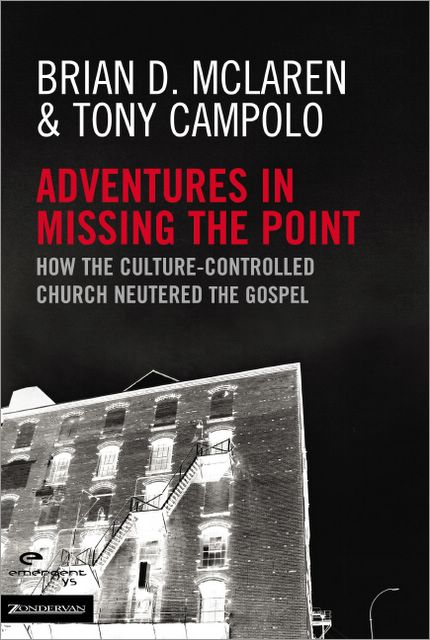
Adventures in Missing the Point


Currently Reading Posted by Hello

I'm on to another McLaren book...Adventures in Missing the Point: how the culture-controlled church neutured the gospel. I would subtitle it...Why we always seem to ask the wrong question.

Unlike the McLaren triology (see post below) this book takes a more direct approach to rethinking the Christian faith. Plus, it includes Tony Campolo. Tony and McLaren share chapter writings and then each comment on each other's thoughts. It's a good primer for the things that were touched on in A New Kind of Christian.

Tony and Brian rethink everthing from the Bible, to salvation, to the end times, to women in ministry, to the environment and more. I think it's very helpful to hear these two respected pastors/theologians talk about issues that many people think are pure black and white. In reality, there is a range of thought in Christendom and I find it helpful to hear it all, not just one version.

I was discussing this book with a few others last week and we noted how much more intertested people seem to be in the Christian message if it's not presented it in such black and white - "all or nothing" ways. As I've written before, no one likes things crammed down their throat. When we sense people have an agenda (and that agenda involves us!) we naturally back away. This book softens the edges of the faith and helps people find an entry point to it.

Thursday, June 16, 2005

Rethinking Hell


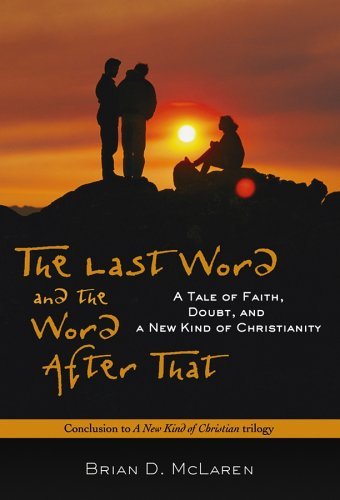
Just finished reading. Posted by Hello

The Last Word and the Word After That by Brian McLaren is the third book of this postmodern trilogy. The first two books are A New Kind of Christian and The Story We Find Ourselves In. I enjoyed the full trilogy because it gave me permission to think outside the rigid box of fundamentalism that I was raised in spiritually. I didn't agree with everything McLaren had to say, but I enjoyed the discussion, and that's just what the books are...a discussion.

This isn't a "Lord of the Rings" type religious trilogy. This is really a thinly veiled excuse to talk about deep theological issues in a more engaging manner. The main character is a pastor, Dan Poole, who is rethinking the conservative faith that he grew up with. He asks his friend/mentor, Neo, many of the things that I've wrestled with myself throughout the years. The discussion gave my thoughts "voice" and helped me to work them through as well as not feel like I'm the only one to question what many consider unquestionable.

The Last Word... is a bit different from the first two books in that it focuses entirely on the subject of hell. I'm sure many people will be offended (in fact ARE offended, based on amazon.com reviews) that he would even dare question the reality of hell. But I would hope that every true believer of Jesus at least pauses to question their concept of hell. If people really are being sent to hell to "burn for eternity", I'd hope they'd give it more than just a passing thought! Doesn't compassion demand that?

McLaren doesn't preach a new doctrine on hell, he merely uses various characters to offer the history of hell, the various views on hell and reflect on it logically, theologically, and emotionally.

Don't start with The Last Word. It may bore you to tears unless you like history and philosophical arguments. Plus, if you are uncomfortable with uncertainty, it might be too much too fast. Start at the beginning.

Wednesday, June 15, 2005

Why People Don't Attend Church (Part 7)

When I was in high school I went to a party at one of my friends. I must have been 16. My friends had some whiskey. I had tasted it before and wasn't too impressed so I was staying away from it. But while I was there, my dad called to tell me that our dog had bit a child and we were going to have to put it to sleep. That really bummed me out. I heard some place that people "drown their sorrows" so I gave the whiskey a try. It was bad, but if you mix it with enough Coke it goes down just fine.

I have no idea how much I had to drink. All I know is that I woke up in front of a toilet the next morning. (Good thing I asked permission to spend the night!) My friends must have thought that was the safest place for me. I remember having to go to work the next day and feeling nauseous all day. I must have been green. I felt awful. Needless to say, I've never touched whiskey since!

Church can be like that. One bad experience can ruin you for life. I remember my dad telling me that when his uncle died that his priest asked his father for $1000 to say mass to shorten his time in purgatory. I think my dad was bitter about that his entire life. I've heard of numerous people who have been scared away from church over money issues.

I have enough of my own experiences to keep me out of church for decades. One, in particular, kept me out of church for a few years. I was being manipulated and there's nothing worse than being manipulated when you are vulnerable. You see, everyone that goes to church is somewhat vulnerable. They are open to hearing from God. So the church/minister has a special entry into your life. When they abuse that place it's called spiritual abuse. And spiritual abuse, like that whiskey, leaves a nasty taste in your mouth. Your gut instinct tells you to stay away. And that's what I did. Every time I tried to go back to church it seemed phony/insincere. It took me a number of years before I could go without questioning every word spoken.

Lesson: For the church, the lesson is that we need to win back people's trust. We have to realize that there are scores of people out there who have been - not just bored but - abused by the church. We need to directly address these issues in what we say and do to convince them that we are different - that we are motivated by love and compassion, not greed and power.

For people with a bad church experience, the lesson is to try again. Don't give up hope. God has a church for you somewhere. As much as church people have let me down, I'm compelled to be a part of the church because I'm convinced that it's God's expression of his kingdom on earth - well...at least that's the plan! I really believe that the church is the only institution that can offer true hope. But it will never be that if people like me abandon it. We have to go in and reclaim it for what God intended. I'm game. How 'bout you?

Wednesday, June 08, 2005

Why People Don't Attend Church (Part 6)

The other day I went to a local store looking for something. They were out of what I wanted but the owner said the shipment was coming in that same day and if I came back the next day he'd have it for me. No problem. I returned the next day.

The owner wasn't in so I spoke with a salesman. I saw that a shipment of goods had come in but not what I wanted. I told the salesman that the owner had said my particular item would be in. He said, "Oh, I can believe that!" and then chuckled like, "He'll say anything to get you to come back and make a sale."

That wasn't a big thing but the more I thought about it the more it bugged me. I didn't like that the owner would lie to me and I didn't like how his salesperson openly revealed the owners underside. I never returned and found what I wanted some place else.

My point? It doesn't take much to send someone away, to turn them sour. It's not always rational or mature, but that's what makes us human! The same is true about church. Some of the littlest things will turn people away. It's almost as if they are looking for a reason...any reason to not return. Let me list a few...

  • the church asked for or talked about money too much.
  • the pastor made them feel guilty.
  • they experienced a church split.
  • they experienced too much gossip and negativity.
  • people didn't pay enough attention to them.
  • people paid too much attention to them.
  • the pastor/priest sex scandals in the news soured them.
  • they didn't use the right version of the Bible.
  • there were too many hypocrites.
  • their children didn't like it.
Some of these ARE big issues, worthy of concern. Some of them are minor. I'm not making a value judgment on any of these reasons, just noting that there is a plethora of reasons to not attend church. I could do a 100 entries to this series if I wanted to!

Lesson: Churches can't assume that just because people visit they will return...even if they attend for months. Many people are one false move away from leaving. Why? They lack trust. They've been burned, either by church or someone signifcant in their lives along the way. There's not always a way to prevent this. But it is helpful to see the crowd for what they are...somewhat distrustful and skeptical.

Churches have to prove that they are sincere...sometimes over and over before people will believe it. Don't take anyone for granted. Go the second mile to communicate and be clear about your intentions. It's an art to know how much to challenge and when to cut people slack. Do what you can to help these doubters relax but if they leave, don't beat yourself up. You can only do so much. They may not be in a good place to join you right now and that's okay. Every person is at a different place in life and God will work with them where they are at- even if that's not in a church for now.

Note: I'll be off line until June 15. I'll address more excuses then.

Why People Don't Attend Church (Part 5)

Along the lines of telling people what to think, people also stop coming to church when they see that Christians have every question answered and tied up with a pretty bow.

Imagine this, you are new to a church...in fact, new to church all together. You have some questions/longings in regard to God so you think that church might be a good place to start your quest. You walk in and everyone is dressed for a dinner party...dresses, suits, well manicured, etc. That's not bad but you take note. Then you are greeted by very smiley people. In fact, they all smile about the same, as if they had a class in smiling. You are a little uncomfortable, but you are determined.

You reach your seat and notice that there is a high number of intact families..dad, mom, and two children, or at least couples, in all the pews. Again, that's nice but it makes you feel a bit odd since you've been divorced twice and now you are living with someone. The music starts, everyone rises on cue. The music isn't too fast or too slow. It's not too loud or too soft. It's just right. A bit boring by your standards but everyone else seems pleased.

Now comes the sermon. The pastor raises some deep questions about faith, God, humanity and suffering. You are glad you came because these are exactly the issues that got you to church in the first place. With such deep questions you are guessing that the pastor might take a few weeks to address them all. But within a matter of minutes he quotes a few Bible verses, offers a few trite answers and closes in prayer. You look around in amazement. He can't be serious. But everyone else seems content. Satisfied. And you leave disappointed, with no intention of going back.

Lesson: We too often sell God out as some answer man in the sky. We have our catechisms with an answer for every question you can imagine. The thinking person doesn't expect an answer for everything. They just want to get a perspective on life. They find it refreshing when people say, "We really don't know what God will do about that." Too often churches feel compelled to resolve every quandry that people have but in doing so they remove the mystery from God as well as the joy of worshipping him.

There are some definites about God and Jesus. We can declare those boldly. But we need to learn to be quiet about the indefinites. We aren't fooling anyone when we speak with certainty about things for which we are clueless.

And when we speak with less certainty, not more, it will be reflected in who attends and what they look like! When life is mapped out down to the last square inch, visitors look at us and say, "I don't fit in here." But when life has some mystery, that communicates a freedom to be different and visitors realize that your community is open to diversity. You aren't looking for cookie-cutter believers but sincere, thoughtful seekers of God.

Monday, June 06, 2005

Why People Don't Attend Church (Part 4)

In Part 3 I mentioned that the church needs to humbly admit that it doesn't have all the answers. It is a work in process. Hidden in that lesson is another reason why people don't attend church and that is that they don't want to be told what to do or how to think. Or to put it in the venacular, they don't want the "truth" to be "shoved down their throat".

I don't think this is just a church sensitivity. This is true anywhere and it's true of all of us. There was a time when it was socially acceptable to have a high authority/submission environment. There are still pockets of this in business, home, and church. But in general, people won't stand for it. They demand respect. Dignity. It's not that they don't want to be told what to do or how to think. They just want to be told in a way that doesn't shame them for their current state.

But shame is what many people expect to receive at church. They assume that they will have to check their brains at the door and swallow whatever the church/minister dishes out. That's not only demeaning but, if you continually subject yourself to that, it turns you into a hypocrite. You act like you agree when inside you don't...at least you don't agree with the tone.

Lesson: As Christians, we believe that God has spoken through history and certain individuals that recorded all of this in the Bible. The life, death and resurrection of Jesus verifies the truth of these stories for us. So we stand in a dangerous place...convinced that we have the truth and everyone else needs to have what we've got. Wow...I don't even like writing that. I believe it, but it sounds SO ARROGANT. We have to realize that, right out of the shoot, we will be offensive to many people. We live in an age of pluralism. Everything is relevant. What is black and white to us is only various shades of gray to others. So we need to appreciate this about our audience and show them, respectfully and without condescending to them, why truth can be known.

There's an art to proclaiming truth without being arrogant. That has to be the goal before us at all times. Jesus did it masterfully. He could speak the bare truth and still attract prostitutes, drunkards, lawyers and the religious elite. Practically speaking, I think this involves speaking the truth without pointing at people (judging). People need to feel like they are a part of the discussion and not the subject of the discussion. The minute we talk about "those people" we are polarizing our crowd and telling our guests that if they are not exactly like us then they are not only unacceptable to us but to God as well.

We also need to let people know that they are free to have their own thoughts. They are free to make their own decisions. Thought, reason, doubt, questioning... are all welcome. Those are attributes of the brain that God gave us so we don't want to quench them but encourage them. And if people don't land where we have landed, we still love them and accept them. We may not be able to call them a fellow believer, but they are fellow humans seeking God. So let's focus on what we have in common with them rather than what we disagree on. That way we can at least keep the dialogue going. Otherwise our guests feel like they are no longer welcome and they join the ranks of those who don't attend church again.

Thursday, June 02, 2005

Why Does God Allow Suffering?

I am often asked why God allows suffering to happen. I just emailed someone the following answer and I thought I'd share it here. (A little background...this person has a marriage that is falling apart due to infidelity. They said that they want to believe in God but it "gives them pause" every time they see babies suffering, etc.)

I'm sure it gives God pause too. Everything that is wrong in this world (including bad marriages) came as a result of a human's poor choice. God CAN correct everything, but I don't think that's God's role, to run behind us like a mechanic or butler, fixing everything we break. He WILL make everything right in the end, but until then he promises to be with us through the pain and suffering.

I recently asked a group this question: If you are a parent and you had the option to have a child that was wired to never disobey, always be respectful and grateful, and always say the right thing at the right time...would you choose that option or would you choose to let them live a normal life and take the risk of misbehavior? No one in the group said they'd choose the first option. Why? Because it would be like having a robot for a child. Who wants a robot? We'd rather take the risk that they will cheat and drink and steal and get pregnant than have a robot. There is no relationship with a robot.

That's exactly the choice that God made too. He risked giving us free choice in hopes that we would be in relationship with him. He could have made us robots. But what is the benefit in that? As a result of God's risk, we all suffer. Thankfully God is with us to bring healing and comfort and some day he will "make all things new" as it says in the book of Revelation.


At least...that's the short answer to a very big question.

Wednesday, June 01, 2005

Why People Don't Attend Church (Part 3)

Before I go any further in this discussion, let me say that it's not all the church's fault why people don't attend church. Sometimes it's the issue of the would-be attender. And sometimes it's not the fault of either. It's just the result of a busy world with too many things to do.

Also, let me clarify something. When I talk about "attending church", I'm simply talking about a Sunday service. "Church" is much bigger than that. In reality, "church" is a community of people that have committed their lives to obeying Jesus together. But for the sake of this discussion, I'm reducing the meaning of church to the Sunday service because that's what most people think of when they hear the word and that's the most common entry point into the community.

Given that definition, another reason that people don't attend church is that there is too much competition for that time slot. When I think of our "competition" on Sunday morning, I never think of another church. We're not competing for people to attend our church over another. We are competing with things like...sleeping in, coffee and the Sunday newspaper, fishing, golfing, house chores. There are only so many hours in the week and most of us have more on our "to do" list than we have time to do them in.

Many people can't justify taking a couple hours of valuable time to participate in something that they see no immediate return on their investment. In two hours I can play nine holes, or put in a garden or get the paper read! Church will always be there. It's not as urgent a need as the others are.

Lesson: Churches need to make their Sunday service valuable. Now, in theory, you shouldn't have to do that for church members, people that are committed to the community. Members should gather for the same reason that a family gathers for a meal - to build relationship (not the gourmet meal). But I"m not talking about the committed. I'm talking about the person that is considering church attendance.

There are three things that I've seen people attracted to... a chance to build relationship, music that helps them connect with God and a message that helps them to be a better person - whether that's understanding God better, or other people or themselves. If a person is convinced that attending a church service will make their life better in some way, they'll make time for it. If they perceive that church attendance is a time waster, a mere religious formality, then their pragmatic side takes over and they stay home. That might seem selfish, but remember, I'm not talking about committed believers. I'm talking about that individual who is assessing how they should spend their time. They don't have any connection that makes them feel obligated to attend. In fact, it's their other life obligations that make them want to stay home.

The reality is that most people won't venture into a church until they have a pressing concern... they want to expose their children to God, their marriage is failing, they have lost a sense of purpose, etc. They suddenly feel vulnerable and are looking to see if God can meet them in their weakness. For this reason, it's imperative that churches offer these seekers an experience that impacts them for good and not a social club or meaningless religious formality. In many cases, they'll only give you one chance. I wish that wasn't the case but it is. They need to walk away saying, "I'm glad I came. I needed that. I need to return for more."

Tuesday, May 31, 2005

Part Two Continued...

Yeah! Someone responded with a comment on yesterdays post! I hope it's a trend!

I realized that I didn't write a learned "lesson" for my post below. I guess the lesson is what I said in the closing sentence: to be honest. We need to admit our failure. That's one of the reasons for addressing this topic in the blog. I don't want people to think that the current church is the best we can do. Even at Cedarbrook, as hard as we work at addressing the weaknesses of church, we are FAR from being what church should be. We are still in the process of laying our foundation.

At Cedarbrook, we are very much in the "me" stage of faith. That's not a bad thing because we are in process. Cedarbrook has attracted a lot of people either new to faith or coming back from having rejected the church. In general, people are reconnecting with God on a personal level. They aren't at the stage yet of thinking corporately or wanting to impact the community as a whole. That's where my heart is and that's where I want to take us, but I have to let people go through the process. Even as our mission statement says...we need to FIRST EXPERIENCE, THEN share, the life-changing love of God. We are in the experiencing mode right now.

My point is that "doing" church in the 21st century in a way that does justice to God and his call is no easy task. It's easy to do what others have done or what is easiest. But our call is to live a lifestyle that reflects God's character and kingdom in the middle of people that are fixated on their own wants and desires. How to do that without being sucked into their web or coming across as narrow minded bigots is a tall task.

So, again, the lesson? Let's continually admit our failure. Let's not try and kid anyone that "we've arrived" - that church is everything God wants it to be and you should love it if you love God. No, we are in process. The church is not always loveable. We fall short but we have a picture in our mind of what it should be and it is to THAT end that we are striving. If you choose to join us, we want - we need your input. YOUR contribution is vital to our success. Please DON'T check your brain at the door and just agree with everything we do and say. God is creative by nature and he is continually creating new things in us as we work together to bring his kingdom on earth.

Note: for those of you that would like to share your comments but are too shy, you can do it anonymously. So click on the link below and let us hear YOUR thoughts too!

Monday, May 30, 2005

Why People Don't Attend Church (Part 2)

When we consider church attnendance, we have to throw out our assumptions...and we (meaning "we" church goers) have a lot of them. We assume that people believe in God or want to believe. We assume that people want to pursue truth and that we possess it. We assume that coming to our particular church is the most natural thing to do. We assume that if a true seeker does enter our doors that they will easily understand what we are doing, why we are doing it and understand how it all relates to knowing God.

I agree that it is safe to assume that people have at least a minimal faith/belief in God. Polls have continually indicated that throughout the years. The church has warned of our nation turning away from God but that hasn't happened. There is a greater interest in spirituality than ever before. But people have been turning away from "our" kind of God - the Chrisitian God. And why is that? Erwin McManus puts it well...

"The biting truth is that this country in not rejecting spirituality but Christianity. The indictment that we must receive is tha the Christian faith as we express it is no longer seen as a viable spiritual option. Masses gave the church a try and left wanting. We accuse them of not being willing to surrender to God; they accuse us of not knowing him. People are rejecting Christ because of the church! Once we were called Christians by an unbelieving world, and now we call ourselves Christians and the world calls us hypocrites. Is it possible that it wasn't the nation that was becoming dangerously secular but the church? We were neither relevant nor transcendent. We have become, in the worst of ways, religious." an Unstoppable Force, p. 29

The key to this indictment is in the way we express our faith. It may make sense to insiders, people who know the "codes". But to outsiders it comes across as rules and meetings. Who needs that? People are looking for relationship and transcendance.

I say all this to underscore the fact that a big reason that people don't want to come to church has nothing to do with them and everything to do with us! People are looking for something to give their life to, even die for and our message is not compelling. We have drifted far from the faith of the first disciples. So... before we are quick to point the finger at the unchurched, let's look in the mirror and ask where we've gone wrong. That level of honesty alone is attractive.

Wednesday, May 25, 2005

Why People Don't Attend Church


Currently reading Posted by Hello

Imagine this...you are driving down the road and you see a sign outside a house that says, "Join us for a free supper every Monday night." Would you go? Maybe if you were really hungry or very lonely. But odds are you wouldn't even think twice about the offer. Why? Well, you don't know what's going to happen. You don't know if you'll fit in. You don't want to go and feel trapped. Plus, what if the food is bad?

If you could just go, eat and leave without any further commitment, you might consider it. But what are the chances of that happening? There's probably a catch. People don't typically offer free meals. Even if you heard that there is not a catch, the people are really nice and the food is fantastic, you might still not go. You just don't want to feel awkward or like you are taking advantage of them.

I think these same feelings are why many people don't attend church. There are obviously other reasons (and I'll get to them) but these are the most basic ones. It's especially awkward if you don't have any church experience. You don't know what to expect and you don't want to stand out as a novice. As good as the church service might be and no matter how many people recommended it, you choose to stay home.

Lesson: If the neighborhood diner wants me to come, there are a few things he/she could do. One, if I could meet the home owner outside of the dinner context that would help - less pressure. Or maybe they could have the meal outside so I can stop casually and keep going. Or putting a brochure in my hand that explains what the dinner is all about would help me better understand what goes on and why.

In the same way, churches need to break down the discomfort factor to encourage people to join them. People often ask me how they can get their friend to come to church. I tell them that the best first step is to get the church to them. A website is a great entry point to experience a church in the comfort of your home. On the Cedarbrook site, you can request a free dvd with a recorded service and an interview with me. That way your first experience at church isn't completely new. We also take "church" to the park once or twice in the summer. People can stand back and simply observe what a service looks like from afar. And we have done special productions at the local theatre during the holidays.

If churches expect people to always come to them, they might be waiting a long time. That's fairly presumptuous. They have to give people a reason to come, not just expect them to show up because "it's the right thing to do." And the reason has to be strong enough to overcome the discomfort factor.

Stay tuned for more thoughts on why people don't attend church.

Tuesday, May 24, 2005

Maybe You're a Reformer at Heart

Have you ever wondered what's wrong with you? Why you don't fit in? Why the crowd seems to be so content while you sit back with your unanswered questions? I have.

In fact, the other day I was speaking with a pastor friend of mine and we both shared our reservations about church - an odd thing for pastors to admit. But we both felt like we are often out of step with the masses. Most of what exists as church today only frustrates us. Then we fall into the guilt of feeling like there must be something wrong with US. Why are we so critical? Can't we just be happy with the way things are?

If you share my discontent, take heart. You may not be as big of a misfit as you think. What might be happening is that YOU see things clearly. Rather than let your discontent repel you from the church and learn to keep quiet, maybe you need to do just the opposite... embrace the church and speak your mind. It may actually be the mind of God. Did you ever think of that?

Before Cedarbrook Church started I taught a series of messages on the book of Nehemiah (these were meetings that we had before we officially opened). We learned that vision always starts with discontent. The visionary has something in mind that isn't yet in place. It's out of that sense of frustration that they are moved to take action. They move to bring what's in their mind into reality (often in the face of opposition).

Unfortunately, many visionaries assume that they are mere malcontents. They feel that they are better off to stay out of the church in order to not "infect" anyone with their strange thinking. But I believe some of the church's best people are currently on the outside looking in. If the church is going to become who God meant it to be, we HAVE to bring these visionaries inside of the church, make room for them and affirm them.

Let me be the first to affirm you in your contrarian thinking and invite you to bring it into the church. If you get kicked out of a few in the process, that's okay. Keep trying. You can always move to Menomonie and join Cedarbrook! Some of our best leaders have been reeled in from the fringes.


Over the next few days I will be looking at what it is about church that keeps so many good people away and the lessons we can learn. I hope you'll join me, invite a fellow discontent and even add your two cents worth to the discussion. Stay tuned.

Monday, May 23, 2005

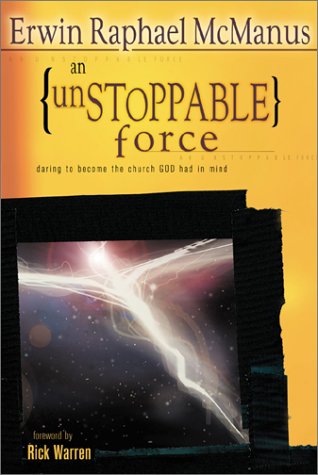
Book: an Unstoppable Force

I'm currently reading (among a few others) an Unstoppable Force by Erwin McManus. McManus mentions that when he was a young pastor he was a part of a church that was on the verge of extinction. They had $20,000 left in their account and they were protecting it like it was the cure for cancer. Erwin suggested that they invest that money in reaching out to the community. But his other leaders quickly objected saying, "But we must survive!"

McManus said that they should either reach their city with that money or die trying. His comment on that experience was "Once survival has become our supreme goal, we have lost our way."

I was at a church conference last Friday and they asked the question, "What are you willing to go out of business for?" In other words, what's so important to you as a church (or business) that you are willing to risk it all, and if you fail, you aren't ashamed because you know you died trying.

I'm afraid too many churches are like McManus' church. They aren't willing to go out of business. They just want to survive. They think that merely existing is somehow virtuous. But it's in risking it all that the church has found it's true self and ultimately grown. McManus notes the martyrs of the faith. They didn't survive. They went out in flames...literally. But, as has been said...The blood of the martyrs is the seed of the church.

I'm challenged by these thoughts because Cedarbrook has taken risks from day one. I want to keep it that way. Now that we have some money in the bank I don't want "survival" to become our goal. Our goal has to continually be to reach more people, more effectively with the good news that God is pursuing us in Jesus.

If you want to check out this book, click here.

Wednesday, May 18, 2005

Five Myths About Change

Speaking of change...Fast Company magazine discusses it in their May issue. Consider these myths (my thoughts are in blue)...

Myth: Crisis is a powerful impetus for change.
Reality: Ninety percent of patients who've had coronary bypasses don't sustain changes in the unhealthy lifestyles that worsen their severe heart disease and greatly threaten their lives.

I think he put it awkwardly but the point is, sustaining change is hard. Even the threats of death and hell don't always help.

Myth: Change is motivated by fear.
Reality: It's too easy for people to go into denial of the bad things that might happen to them. Compelling, positive visions of the future are a much stronger inspiration for change.

I'm guilty of preaching a positive message. You won't often see me pointing my finger at people on Sunday morning. Am I soft? No, I've just learned the hard way that being negative doesn't work. More importantly, I've seen the change that comes when you cast a vision of hope.

Myth: The facts will set us free.
Reality: Our thinking is guided by narratives, not facts. When a fact doesn't fit our conceptual "frames" -- the metaphors we use to make sense of the world -- we reject it. Also, change is inspired best by emotional appeals rather than factual statements.

Christians often fear being "emotional". It has it's drawbacks, but God gave us emotion to move us to do things that we wouldn't normally do without it. Sometimes we choose poorly in a moment of high emotion. But other times our emotion moves us take the risk necessary to make a God directed change. Wisdom (God's Spirit within us) knows when to act in the heat of the moment and when to walk away.

Myth: Small, gradual changes are always easier to make and sustain.
Reality: Radical, sweeping changes are often easier because they quickly yield benefits.
When people take small steps, it's easy to justify "going back" because it's almost imperceptible - no one knows if you are back-slidding or not because you never changed that much to begin with. But Jesus called his disciples to sell everything they had. He called them to die to themselves. When we make big commitments we often paint ourselves into a corner, forcing us to follow through on our commitment.

Myth: We can't change because our brains become "hardwired" early in life.
Reality: Our brains have extraordinary "plasticity," meaning that we can continue learning complex new things throughout our lives -- assuming we remain truly active and engaged.
The apostle Paul talked about being transformed "by the renewing of the mind." Science bears this out. Renew the mind and change will follow.


Want to read the whole article on change (fascinating stuff!), click here.


Monday, May 16, 2005

The Change Process

I've been a student of change the last five or six years. The whole topic is fascinating to me; both organizational change and personal change. From an organizational standpoint it's interesting what it takes to help a group through the change process without freaking them out! And from the personal side, it's interesting what it takes to help people make lasting change.

From my experience in working with people, I see four things necessary to bring about lasting change;
  1. Good information. Learn as much as you can about your problem. Your knowledge may not change anything, but just understanding the problem and it's source is reassuring. It's reassuring to know that you aren't the only one with the problem - that it's SO common that there are books written about it. When I teach on shame people are always amazed that there are distinct causes for their feeling worthless. When they see the cause and effect relationship it gives them a lot of hope. Plus, in some cases, information alone can bring change. I have people tell me all the time that they applied one of my sermons and it changed their life.
  2. Prayer. I know people who have heard every sermon and read every book on a subject and they still have no clue how to change. But I've been able to sit down with some of these people and pray with them and the change they've longed for hits them like a lightning bolt. Why does God choose to move through prayer? Three reasons: one, he gets the credit. If it was just you doing or thinking something, you'd leave God out of the equation. Two, praying WITH someone else brings your problem out of the closet and into the open. Three, God likes to work through other people. The process develops relationship and God is all about that.
  3. Discipline. You may have a true heart change but remain unchanged simply because you have developed bad habits through the years. This is the piece that many people leave out and then wonder why they slipped back into their problem.
  4. Support. God almost always brings change through other people. If you think you can find healing on your own...good luck. Odds are it won't work. Find yourself a good group of friends who will stick with you even when you keep messing up. Give them the right to hold you accountable.